The most famous names in this area are John Aitken & Sons from Victorian Birmingham. Norwegian designers David Andersen and Finn Jensen from the mid-1900s also stand out. Modern brands like Perfect Jewelry offer new choices, and as a leading sterling silver butterfly enamel brooch maker, they bring a fresh perspective to the craft. Each maker of these sterling silver butterfly enamel brooches has a unique style. John Aitken & Sons used detailed metalwork and bright enamel. David Andersen created new enamel methods. Finn Jensen liked shapes that look natural. Perfect Jewelry, a trusted sterling silver butterfly enamel brooch maker, mixes old styles with personal touches. This guide shows what makes each maker’s work special. Readers will learn how to spot hallmarks and signature enamel colors. By the end, you will value high-quality work in this jewelry field.
Learn the marks on antique brooches to check if they are real and to find out how old they are.
Explore Victorian makers like John Aitken & Sons for their detailed enamel work.
Discover mid-century Norwegian designers for bold, modern looks.
Think about newer brands such as Perfect Jewelry when you want custom choices and good quality.
Look at the enamel and weigh the silver to make sure the piece is real.
John Aitken & Sons is one of the most famous names in antique butterfly brooch making. This company was based in Birmingham, in the heart of England's Jewellery Quarter, an area known for great silversmithing. Collectors value these brooches because they show the best of Victorian skill. The company used guilloché enamel techniques, a hard process that needs steady hands and close focus. Each brooch from this time shows how factory work and old-style art came together.
The firm's butterfly brooches have fine silver filigree that shows the delicate look of butterfly wings. Workers painted bright royal blue and green enamel by hand onto the metal, making pieces that seem to glow. These brooches date back to 1917, a time when butterflies stood for change and beauty. The mix of precious metal and colorful enamel made these brooches popular with stylish women back then.
English sterling hallmarks give a solid way to check and date these old treasures. Each hallmark part has a clear meaning for collectors and history fans.
Hallmark Component | Meaning | Historical Significance |
|---|---|---|
JA&S | Maker's mark | Shows John Aitken & Sons, a well-known Birmingham firm |
Anchor | Birmingham assay office | Proves it came from the Jewellery Quarter |
Walking Lion | Sterling silver standard | Shows the silver meets British legal purity rules |
Letter 'S' | Date mark (1917) | Places the brooch in the Edwardian/Art Nouveau era |
These hallmarks turn a pretty object into a piece of recorded history. Collectors look for pieces with clear marks because they prove the item is real and show where it came from. Few of these brooches still exist, which adds to their worth, since many Victorian brooches were melted down or lost over the years.
The hand-enameling skill of the 1800s deserves special notice. Each color layer needed careful firing in a kiln, with workers adding glass powder to get depth and shine. This slow process meant every brooch looked a bit different. For anyone wanting a true antique, knowing these hallmarks is key. This knowledge also helps buyers tell real Victorian pieces from later copies, making it a must-have skill for anyone serious about this sterling silver butterfly enamel brooch maker's work.
In the mid-1900s, jewelry design became very creative. Norway became a main place for this new style. Designers left behind heavy, fancy looks from before. They liked simple lines and strong shapes. Two famous names from this time are David Andersen and Finn Jensen. Both changed how people see enamel jewelry. Their work still affects today's makers.
David Andersen became famous for his technical skill and artistic ideas. He started his company in Oslo in 1876, but his best butterfly brooches came later. His workshop was known for taking enamel techniques to new heights. He created ways to make smoother color changes. This new method made his work different from older Victorian pieces.
His approach as a sterling silver butterfly enamel brooch maker used bright color mixes. Green and yellow enamel were his main colors. These colors reminded people of Norway's nature. The enamel had a matte finish, not a shiny one. This gave his brooches a modern, simple beauty. Collectors value these pieces for their special look. Each brooch shows how light works with color.
Andersen's butterflies had abstract wing shapes. He made the natural form into simple geometric patterns. This matched the mid-century modern style. The designs were new and ahead of their time. His work connected old craft skills with modern art. Today, his brooches are in museums and private collections.
Finn Jensen chose a different way from Andersen. He liked organic, flowing shapes. His butterfly brooches showed the feeling of movement. The wings looked like they were fluttering even when worn. Jensen got ideas from nature's uneven beauty. He did not use perfect symmetry but natural balance.
Jensen made his pieces in the mid-1900s. Collectors usually pay between $70 and $500 for them. This price makes them reachable for serious collectors. His work has clean lines and nature themes. The silver often had textured finishes. These textures made light play in interesting ways. The enamel colors stood out against the metal. This contrast made a strong visual effect without being too showy.
Both designers liked the mid-century modern style. This style valued bold, abstract shapes. It did not use too much decoration but focused on useful design. Matte finishes were a key feature of the time. Designers used enamel colors that matched or clashed to make interest. These ideas guided every piece they made.
The Norwegian way of enamel work was different from British ways. Norwegian makers tried new things with color and shape. They saw enamel as a main art material, not just decoration. This idea created some of the most unique butterfly brooches of that time. Their work still affects today's artists who learn from their methods.
For collectors, Norwegian mid-century brooches give a special mix of beauty and history. They show a key moment in jewelry design history. The pieces have a spirit of new ideas that still matters today. Anyone looking for a sterling silver butterfly enamel brooch maker from this time should seek these two names. Their work is still very wanted in the resale market.
Modern jewelry makers keep the butterfly brooch tradition alive with new methods and materials. They blend old-style craftsmanship with today's technology. These current creators give collectors fresh options that respect the past while welcoming new ideas. One great example is Perfect Jewelry, a company that shows how modern production improves this timeless accessory.
Perfect Jewelry makes the C00419 925 Sterling Silver Butterfly Enamel Brooch. This piece shows top-level skill in the field. The brooch is 36.8 x 59mm, so it stands out but stays classy. Craftsmen cover the sterling silver base with 18K yellow gold. This coating adds warmth and stops tarnishing over time. The design uses blue and green enamel that catches light nicely. Small cubic zirconia stones line the wing veins, adding shine and elegance. Each brooch has a 925 stamp, proving it is real sterling silver.
The making process follows strict rules. Workers put on enamel in layers, heating each coat to get depth and color. The cubic zirconia stones sit in exact settings that hold them firmly. This care for detail makes sure every piece meets high standards. The butterfly design stands for change and freedom, giving the brooch more meaning than just looks. Wearers can pin it to lapels, scarves, or collars for a quick style boost.
Perfect Jewelry stands out with its custom options. Clients can ask for their own logo, pick specific stones, or choose special packaging. The process follows a clear order:
Consultation: Clients contact the team with ideas, photos, or sketches.
CAD Design: Designers create 3D models for client review and approval.
Stone Sourcing: The company finds top stones or uses client-provided gems.
Wax Model: Craftsmen make a wax copy for final changes.
Casting & Fabrication: The piece gets cast in 14K, 18K gold, or platinum.
Finishing: Experts set stones, polish the piece, and check quality.
This careful process ensures each custom brooch fits the client's vision. Quality checks stay strict during production. Every piece gets a full inspection before shipping. The company offers free repair for factory flaws, giving buyers confidence. Bulk orders need 30-45 days, allowing for careful work. Standard packaging includes individual polybags with bubble wrap. Premium options include velvet pouches, acrylic display cases, and magnetic gift boxes. Custom-printed retail packaging with logos and gift hang tags also available.
Other modern makers take different paths. Corocraft, for example, makes sterling vermeil enamel butterfly brooches. Vermeil means sterling silver coated with gold, giving pieces a rich look. Corocraft's designs often use bold colors and geometric patterns. This difference shows the variety of modern styles for collectors. Some like Perfect Jewelry's delicate look, while others prefer Corocraft's stronger statements.
Modern brands also offer flexible production times. Standard custom pin production takes 3 to 4 weeks after artwork approval. Rush services can deliver within 7 to 10 days, though with some limits. This flexibility helps retailers and wholesalers meet market needs. The mix of quality materials, custom options, and reliable production makes modern makers valuable partners. Collectors seeking a sterling silver butterfly enamel brooch maker today have great choices. These current artisans continue the legacy of Victorian and Norwegian craftsmen while adding their own new ideas.
Collectors must learn to read hallmarks before they buy any vintage piece. The British lion passant and the '925' stamp both show sterling silver purity, but they have different legal power. The lion passant is a legally required British hallmark. It has been certified since the 14th century under the Statute 28 Edward Cap. XX. The '925' stamp is an optional purity mark that does not have UK hallmarking authority. This difference matters when checking a brooch's history.
Attribute | Lion Passant | '925' Stamp |
|---|---|---|
Legal Status | Legally required British hallmark | Not a legal requirement; optional purity indicator |
Geographic Scope | Used only by UK Assay Offices (e.g., London) | Used worldwide, especially on items not tested in the UK |
Historical Origin | Certified since the 14th century under the Statute 28 Edward Cap. XX | Modern numeric fineness standard |
Meaning | Certifies sterling silver fineness (925/1000) in the UK | Shows the same 925/1000 purity but without UK hallmarking authority |
A proper identification process follows a clear order. First, check for the Lion Passant as the main British mark. Second, if it is missing, look for '925' or 'Sterling' as backup purity marks. Third, check for 'EPNS' (Electro-Plated Nickel Silver), which means plating, not solid sterling.
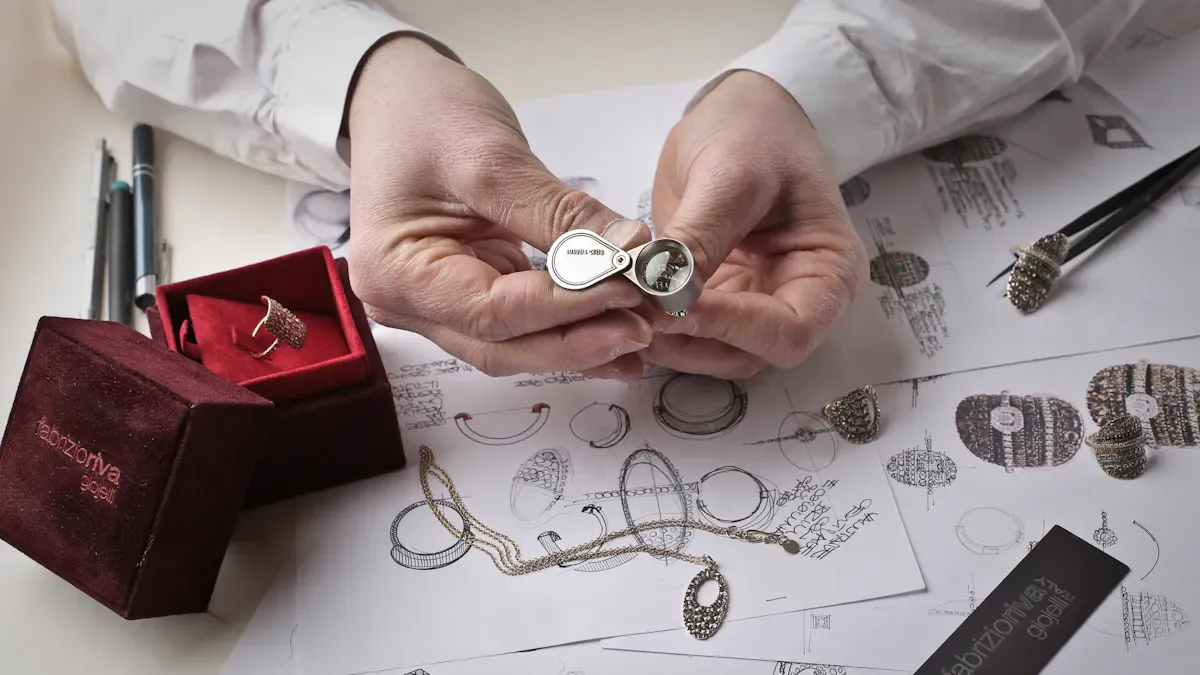
Several tools help with mark identification. A magnifying glass or jeweler's loupe reads tiny hallmarks. Reference books like Jackson's Hallmarks, The Book of Old Silver, and Kovel's Guide to Silver Marks give detailed examples. Online databases such as the Online Encyclopedia of Silver Marks, Hallmarks & Makers' Marks, Sheffield Assay Office Online Database, and Antique Jewelry University offer searchable records. A soft lint-free cloth cleans the hallmark area before inspection.
Tracing a brooch's origin needs careful comparison. Take a photo of the hallmark first. Compare the image against reference guide entries. Note that older hand-drawn guides may mislabel marks. Cross-check with documented collections to confirm the correct identification. Modern editions like Bille Hougart's Native American and Southwestern Silver Hallmarks use real photos, allowing precise visual comparisons.
Enamel quality tells a lot about a piece's craftsmanship. Real enamel looks smooth and even across the surface. Collectors should check for cracks, chips, or uneven application. Bright color saturation shows proper firing techniques. Dull or patchy colors suggest poor production methods.
Silver weight gives another clue to authenticity. Heavier pieces usually have more silver content. A genuine sterling silver butterfly enamel brooch maker makes pieces that feel noticeably heavy. Lightweight brooches may mean hollow construction or plated base metals. Collectors should compare weight across similar pieces to learn standard mass for real items.
The combination of clear hallmarks, quality enamel, and proper weight confirms authenticity. Each element supports the others in verification. A brooch with a valid lion passant but cracked enamel may still have historical value. On the other hand, perfect enamel without proper marks deserves suspicion. Collectors who master these evaluation skills can confidently identify pieces from any era.
Collectors face a meaningful choice when selecting a sterling silver butterfly enamel brooch maker. Victorian pieces from John Aitken & Sons offer historical authenticity and rare craftsmanship. Norwegian designers David Andersen and Finn Jensen bring mid-century modern appeal with bold colors and organic forms. Contemporary brands like Perfect Jewelry provide customizable options and rigorous quality control.
The right choice depends on personal preference. Some collectors value antique hallmarks and hand-enameling techniques. Others prefer modern production standards and customization flexibility.
Readers should apply the authentication tips from the previous section as a practical starting point. Look for clear hallmarks, quality enamel, and proper silver weight.
Explore antique fairs, online auctions, and brand catalogs to discover a treasured piece that speaks to individual taste.
Collectors should examine hallmarks first. British pieces carry the lion passant and anchor marks. Norwegian pieces often show maker stamps like David Andersen. Reproductions frequently lack these marks or show poorly stamped versions. Magnification helps reveal genuine stamping depth and detail.
Owners should store brooches separately to prevent scratches. A soft cloth removes fingerprints and dust. Avoid harsh chemical cleaners that damage enamel surfaces. Mild soap and warm water work safely. Dry thoroughly before storage. Keep pieces away from perfume and hairspray.
Prices vary widely by maker and condition. Victorian pieces from John Aitken & Sons command premium prices due to scarcity. Mid-century Norwegian brooches from Finn Jensen typically range from $70 to $500. Contemporary pieces from brands like Perfect Jewelry offer more accessible entry points.
Antique fairs and estate sales offer vintage finds. Online auction platforms list verified pieces with provenance documents. Specialty jewelry retailers carry contemporary options. Brand catalogs from makers like Perfect Jewelry provide direct purchasing channels. Buyers should request certification documents for high-value antique purchases.


 EN
EN
 English
  Italian
  Spanish
  Ukrainian
  Japanese
  Norwegian
  Portuguese
  Korean
  Russian
  French
  Danish
  German
  Arabic
  Back to List