Picking a trustworthy sterling silver jewelry bulk supplier takes three important steps. First, check that the material is real by looking for 925 sterling silver specs. Second, judge what the supplier can do by reviewing their credentials and quality control steps. Third, lower your risks with a clear first-order plan that has samples and paperwork. This jewelry wholesale buying guide helps you decide with confidence. Every piece of sterling silver jewelry you stock shapes your brand's reputation. A dependable jewelry supplier gives you clear paperwork and steady quality. Focus on these steps to skip pricey mistakes and build a partnership that pays off.
Look for a 925 stamp to know it's real sterling silver.
Ask for certificates and test reports to check if the supplier is trustworthy.
Know the smallest amount you must buy and any extra fees before you purchase.
Check how well they control quality by looking at product samples and how often items are defective.
To lower your risk, use a scorecard and place a small test order first.
Before you buy in bulk, you must know exactly what you are selling. The "925" stamp shows you the metal content. This number means 925 parts of silver per 1000 parts of alloy.
925 sterling silver is defined as 92.5% pure silver and 7.5% alloy, usually copper. The figure "925" refers to 925 parts of silver per 1000 parts of alloy. The most common markings worldwide for this single standard are "925", ".925", "S925", and "STERLING"/"STG".
Pure silver is too soft to wear every day. Suppliers add copper to make the metal stronger. In every 100 grams of 925 sterling silver, 92.5 grams are pure silver and 7.5 grams are alloy metals. This blend gives you a shiny finish that lasts a long time.
Hallmarking rules are different in each country. The table below shows what you should expect from your jewelry supplier.
Country/Region | Hallmarking Requirement | Required Marks |
|---|---|---|
United Kingdom | Mandatory for silver items over 7.78 grams | Sponsor's mark, fineness mark (925), assay office mark, year mark |
United States | Voluntary, but sellers cannot market items as sterling silver unless they meet 92.5% purity | "925" stamp commonly applied |
European Union | Varies by country; Common Control Mark accepted across several countries | CCM and/or national marks |
India | Mandatory above a certain weight under BIS | Purity marks and jeweler's identification mark |
Canada & Australia | No strict laws; guidelines prohibit misrepresentation | Voluntary hallmarks |
The purity of the material sets your resale value. Customers pay more for 925 sterling silver jewelry when they trust the label. A fake stamp ruins that trust very quickly.
When buyers doubt if items are real, they feel unhappy and leave bad reviews. Fake products and wrong labels break consumer trust and hurt your brand. Certification and traceability help prove items are real and boost your brand's credibility.
As silver purity goes down, tarnishing goes up. Copper reacts with oxygen and common pollutants. This reaction creates silver sulfide, which shows up as black tarnish. Your customers will see this problem. They will blame your brand, not the metal.
Wholesale buyers who check 925 silver jewelry before buying protect their reputation. You should ask for paperwork for every batch of sterling silver jewelry you order. This step keeps your customers loyal and your brand strong.
Verification tells apart a trustworthy sterling silver jewelry supplier from one who cuts corners. You need documents, direct answers, and a clear picture of who really makes the jewelry.
Ask every jewelry supplier for current certifications. These papers prove they follow responsible manufacturing practices. Look for SMETA, RCS, and Technical Evaluation as starting points. SMETA audits cover labor conditions and fair trade. RCS checks recycled content in materials. Technical Evaluation confirms production standards meet industry rules.
Request these specific documents from any sterling silver jewelry bulk supplier:
Sedex/SMETA 4-pillar audit reports you can access through the Sedex portal
Full audit reports, not just certificates, including any Corrective Action Plans
Lab reports from accredited labs (ISO/IEC 17025) with recent dates and matching sample descriptions
Verification of lab report numbers directly with the issuing lab
A reliable supplier uses certification as a sales tool. They share documents without hesitation. Perfect Design, a trusted supplier since 2002 with over 20 years of expertise, holds SMETA, RCS, and Technical Evaluation certifications. The company is known for sustainability and provides full insurance for all workers. This example shows what proper credentials look like.
Use this table to organize your document requests:
Sourcing Factor | Buyer Question | Evidence to Request | Decision Impact |
|---|---|---|---|
Material authenticity | Is the item confirmed as 925 sterling silver? | Material declaration, silver-content evidence, invoice wording | Critical |
Compliance files | Are safety claims supported by documents? | Nickel, lead, cadmium, RoHS, or market-specific reports | High |
Always demand proof of quality certification, batch testing reports, and clear guarantees of nickel-free plating. A reliable sterling silver jewelry manufacturer will use verifiable certification as a sales tool, not a hassle.
You must know if your contact is a factory or a middleman. Factories control production and quality control directly. Middlemen add cost without adding value. Ask direct questions about alloy sources, production standards, and who owns the manufacturing facility. A factory answers these questions with specifics. A middleman gives vague responses.
Look at price differences between similar items. Middlemen usually charge a 20-30% markup over factory prices. This markup raises your costs and shrinks your margins. Understanding MOQ numbers also helps. Factories often set MOQs based on production runs. Middlemen may accept lower MOQs but charge higher unit prices.
Ask about customization and custom jewelry development services. Factories offer these directly. Middlemen must relay requests and cannot guarantee timelines. A reliable supplier shows supplier capability through clear answers and documented processes. When you source silver jewelry, verify who actually makes the product before you commit.
Minimum order quantities are the smallest number of pieces a jewelry supplier will make for one design. This number helps cover the factory's setup costs. You cannot order just ten pieces of a custom design and expect a low unit price. The MOQ for 925 sterling silver is usually 50 pieces per design. Stainless steel and brass need 100 to 300 pieces per design, depending on how complex they are. This difference matters when you plan your product catalog.
Material | Minimum Order Quantity (MOQ) |
|---|---|
925 Sterling Silver | 50 pieces per design |
Stainless Steel & Brass | 100–300 pieces per design (varies by complexity) |
Price tiers reward larger volumes. A supplier might offer wholesale minus 20% for orders of 100 to 499 pieces with a 21-day lead time. Orders of 500 to 999 pieces earn wholesale minus 30% and a 28-day lead time. Orders above 1000 pieces need a custom quote and take 35 to 45 days. These tiers exist because factories spread fixed costs across more units. You pay less per piece when you commit to higher quantities.
Order Quantity | Sterling Silver Discount | Lead Time |
|---|---|---|
100–499 pieces | Wholesale −20% | 21 days |
500–999 pieces | Wholesale −30% | 28 days |
1000+ pieces | Custom quote | 35–45 days |
New wholesale buyers often need low MOQ options. Some suppliers offer ready-stock designs with lower minimums than custom orders. You can start with gemstone rings, minimalist pendants, chain bracelets, hoop and dangle earrings, or stacking rings. These categories often have flexible minimums because factories make them regularly. Ask your jewelry supplier about ready-stock availability before you commit to a custom design.
First-time buyers make costly mistakes. Ignoring MOQ differences between ready-stock and custom items tops the list. You might plan a catalog around the wrong minimum and face unexpected order requirements later. Overordering untested styles ties up your budget and leaves you with unsold inventory. Choosing a supplier based only on the lowest price often backfires. Very low prices may signal different materials, thinner products, weaker plating, or limited quality control.
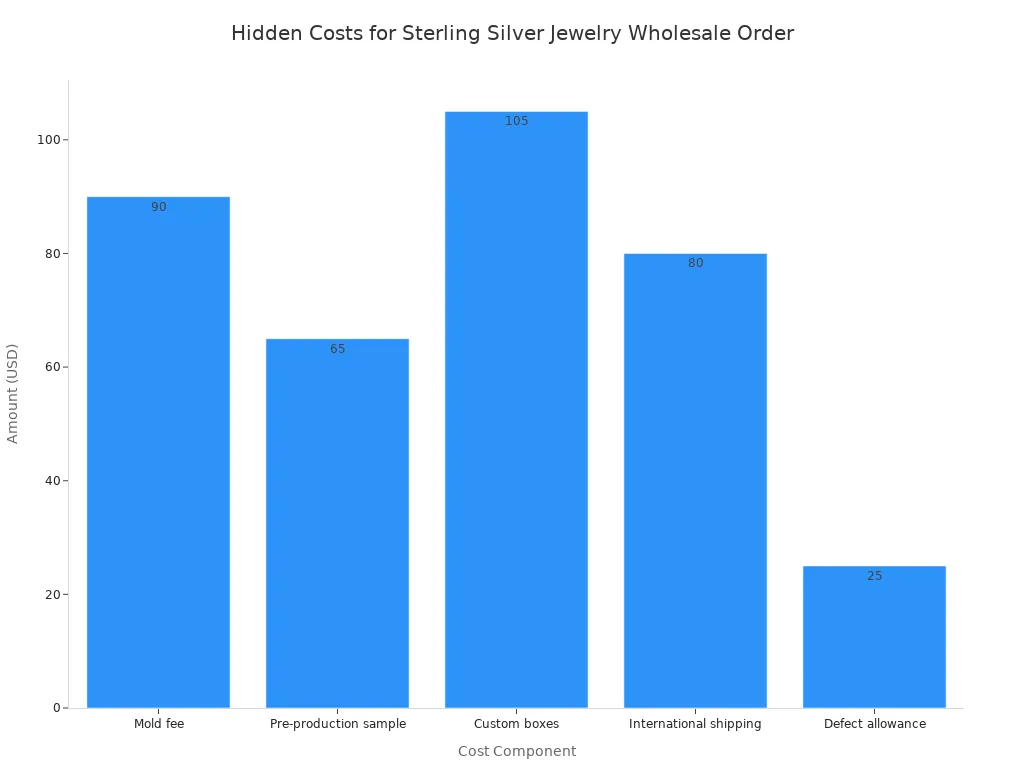
Hidden costs catch many buyers off guard. A pendant quoted at $2.10 per piece for 300 units looks like a $630 order. Add a $90 mold fee, a $65 pre-production sample with courier shipping, $0.35 per custom box adding $105, $80 for international shipping, and a 4% defect allowance of about $25. Your real landed cost becomes about $995, or roughly $3.32 per piece. Always ask: "Other than the unit price and shipping, what other fees should I expect before this order is in my hands?" Some suppliers list mold fees and sample costs upfront. Others mention them only after you commit.
Watch for these common pitfalls:
Mold fees, which can range from roughly $50 to several hundred dollars per design
Sample fees and courier costs
Unit price at the actual MOQ
Jewelry packaging, including boxes, pouches, cards, and inserts
International shipping and possible customs duties
A defect allowance, usually around 2% to 5% depending on the factory
Evaluate shipping costs, lead times, and Incoterms before you finalize any order. Incoterms define who pays for freight, insurance, and customs clearance. FOB means the supplier handles costs until goods load onto the vessel. DDP means the supplier delivers to your door with duties paid. Understand these terms when sourcing 925 sterling silver jewelry wholesale. They affect your total cost as much as the unit price.
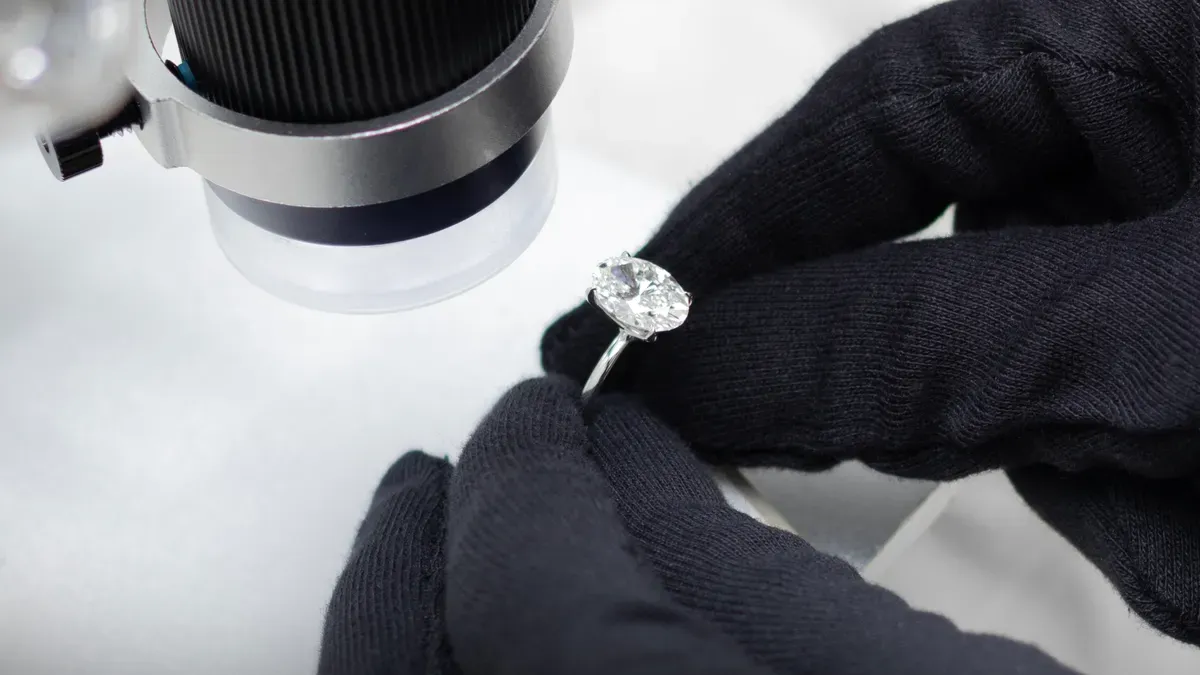
You need to look at samples before you order in large amounts. Compare the plating color to a sample you already approved. Check for smoothness, pits, stains, scratches, and how even the pieces look. A good jewelry supplier has a clear way to prepare surfaces. They check pieces after filing and polishing for pits, scratches, casting marks, rough edges, and missed polishing spots. They check again before electroplating. Only pieces with a properly prepared surface move ahead. They check finished products after electroplating for plating color, smoothness, and consistency.
Plating changes color and finish. It cannot hide an uneven base surface. Defects not fixed before plating cause pinholes, rough spots, uneven reflections, and plating that looks different piece to piece. These problems lead to rejected products, returns, and rework delays. If a surface defect is too deep to fix safely by polishing, the piece should be rejected or remade.
Ask your supplier about their defect rate. A rate of 2% to 5% is normal for wholesale sterling silver jewelry. Ask for their inspection checklist and golden sample. A reliable jewelry supplier uses six rounds of precision polishing and six strict quality inspections. These checkpoints improve surface smoothness, edge quality, consistency, and how the final product looks.
How do you control plating quality? We check plating color, surface appearance, coverage, and visible finish consistency against the approved sample before packing.
Response time matters when you manage a wholesale order. A supplier who replies within one business day keeps your project on schedule. Language support helps you explain custom requirements clearly. Ask if they provide English-speaking account managers.
Order tracking lets you see each stage of production. Request updates at casting, polishing, plating, and packing. This openness helps you plan your launch dates. A supplier who shares progress reports builds trust.
Return policies protect your investment. Ask about defect allowances and how the supplier handles quality disputes. A fair policy covers replacement or credit for items that do not meet standards. Get these terms in writing before you pay. Clear communication and written policies separate professional suppliers from unreliable ones.
A scorecard takes the guesswork out of picking a supplier. Make one before you ask for samples. This tool gives you a record for future choices.
Your scorecard should cover six main areas. Rate each area from one to five. Material verification checks for a 925 hallmark and XRF spot tests. Certifications confirm SMETA, RCS, or Technical Evaluation documents. MOQ flexibility shows if the supplier takes small test orders. Pricing transparency reveals hidden fees. Quality control covers inspection checklists and defect rates. Communication measures how fast they answer technical questions.
Criterion | Minimum Expectation | High Quality Supplier |
|---|---|---|
Alloy verification | 925 hallmark plus XRF spot test | Third-party ICP-MS certificates |
Restricted substances | Nickel below regulatory limits | REACH/RoHS compliance with lab reports |
Finishing | Consistent polish, no visible defects | Multi-stage polishing, measurable plating thickness |
QC process | Final inspection checklist | Inline controls, documentation, batch traceability |
Assign weights based on what matters to your business. A premium brand might give material verification 40% weight. A high-volume seller might focus on lead time reliability. This method helps you compare suppliers without bias.
Look for warning signs as you check suppliers. Very low prices often mean diluted alloys or fake hallmarks. Missing hallmarks suggest the items may not be real 925 sterling silver. Uneven weights in a batch point to poor quality control. Blurry engravings mean low-quality production. Pressure to pay fast through unsecure methods lowers your buyer protection.
Other red flags include vague answers about sample origins, refusal to let you tour the factory, and poor communication after you buy. A reliable supplier shares certifications right away and offers a clear return policy.
Start with a small trial order. Ask for samples first and check all documents. Make sure the supplier signs an NDA before you share your own designs. Confirm shipping terms like DDP versus FOB. Scale up slowly as you build trust. This plan protects your money and helps with future reorders. Use your scorecard before you place a silver jewelry wholesale order. A supplier who meets your standards becomes a good partner for growing your sterling silver jewelry business.
When you check a jewelry supplier, start with these five things: material verification, certifications, pricing transparency, quality control, and communication. Look at how they make their products, ask for samples, and review their business history. This helps you confirm the supplier is reliable before you commit.
The international standard for sterling silver requires at least 92.5% silver mixed with other metals, usually copper. This is shown by the 925 stamp, or sometimes "Sterling" or "Ster." Good manufacturers, especially trusted wholesale silver jewelry suppliers, often add a Maker's Mark for traceability and a Country Mark to show where it was made.
Begin with a small trial order. Use your simple scorecard. A professional relationship needs verified documents, steady quality, and clear communication. You build trust in your brand with every step.
Ask for a 925 hallmark on every piece. Request XRF spot tests or third-party ICP-MS certificates. Check that the supplier gives you material declarations and batch test reports. A trustworthy jewelry supplier shares these papers without any delay.
Most factories set a minimum of 50 pieces per design for 925 sterling silver. Stainless steel and brass need 100 to 300 pieces. Ready-stock designs often have lower minimums than custom orders.
Ask straight questions about alloy sources and production standards. Factories answer with details and let you tour the factory. Middlemen give unclear answers and charge 20-30% markups. Compare MOQ numbers and price gaps between similar items.
Start with a small trial order. Ask for samples first and check all paperwork. Confirm shipping terms like DDP versus FOB. Grow slowly as you build trust. Use your scorecard before you place a bigger wholesale order.


 EN
EN
 English
  Italian
  Spanish
  Ukrainian
  Japanese
  Norwegian
  Portuguese
  Korean
  Russian
  French
  Danish
  German
  Arabic
  Back to List