Ordering custom CZ jewelry from China can go smoothly. You just need a clear plan and the right checks at each step. China custom peridot and CZ handmade jewelry appeals to many buyers. You get competitive pricing, flexible customization, and broad manufacturing capability. These advantages work best when you know how to navigate the process.
This guide gives you ten practical tips, in the order you will use them. Each tip builds on the one before. You will learn how to protect your money and your time. The process is manageable for beginners. Follow the steps, and you can manage your first order with confidence.
Check out and confirm your suppliers before you send any payment.
Order a sample first to check the quality and make sure it matches your specifications.
Put every design detail in a clear spec sheet.
Keep your payments safe by using milestones and trade assurance.
Check the jewelry before you accept the shipment.
Start with places where makers expect to meet buyers. Trade shows let you talk face to face with factory reps. Two shows worth your time are listed below.
Trade Show | Focus / Description | Official Link |
|---|---|---|
Jewellery Expo | A professional show for fine jewellery, gemstones, and accessories; it connects international brands, designers, and buyers for sourcing and networking | |
Shenzhen Jewellery Fair | One of China's most influential jewellery trade shows, held in Shenzhen (a global jewellery making and trading hub); it shows diamonds, gold, jade, and new designs |
Referrals from other buyers give you a fast track. Ask what went well and what went wrong. Sourcing platforms add to your list, but treat every listing as a lead, not a fact. China custom peridot and CZ handmade jewelry quality varies a lot, so compare cost and quality before you order anything.
Ask each supplier for documents, then check them. A business license shows the company name, unified social credit code, legal representative, and business scope. Cross-check it against official business registration records, such as NECIPS in China. The license is a document, not proof of operations. Compare the business scope wording with the registration record and with live-video checks to learn whether you deal with a maker or a trade-only company.
ISO 9001 certification, which most certified factories hold
Factory audit reports, especially if the supplier claims major brand clients
A production capacity and equipment list, in writing
Trade references you can contact
Confirm the company name on the audit report matches the business license. Recognized audits include Sedex, BSCI, Walmart, Target, and Kohl inspections. Refusal or hesitation is a red flag. Ask for sample history too, so you see real peridot and jewelry work before you pay. Research every supplier sourced from China this way, and your first order starts on solid ground.
This peridot buying guide starts with color. Color saturation drives value more than any other factor. Pure green and golden-green stones earn the top prices, while brownish hues sit at the bottom. Clarity, carat weight, cut, and origin all shift the price too. Use this table to compare grades before you request quotes.
Grade | Color Description | Price Range per Carat |
|---|---|---|
Heirloom / AAA | Vivid pure grass green, 10 ct+ | $150–$400+ |
Fine / AA | Strong lime-green, 3–10 ct | $65–$150 |
Good / A | Medium yellow-green, 1–3 ct | $20–$65 |
Commercial | Pale yellow-green, under 1 ct | $5–$20 |
Peridot treatments are rare. Peridot is one of the few colored gemstones sold almost entirely untreated, and no heat treatment improves its color. A few commercial stones with surface cracks may be oiled or resin-filled, so ask "Has this stone been clarity-enhanced?" Treat an "unheated" premium as a treatment red flag. The biggest pitfall in buying peridot is receiving "peridot-colored" glass. Confirm you get real peridot, and request a gem lab report when the price looks too low.
Ask these questions to ask before buying peridot:
Which origin is this stone from?
Can you share the origin and treatment history in writing?
Is this natural peridot or lab-created?
Arizona supplies most commercial material. Pakistan yields finer large crystals at higher prices. Record the origin and treatment history for every stone. These online peridot red flags protect your budget in online gem buying.
Cubic zirconia comes in grades that range from cloudy to near-colorless. A higher grade gives your custom birthstone jewelry a cleaner, brighter look. Match the CZ grade to the design, and the finished peridot jewelry reads as one cohesive piece. CZ is denser than diamond. Clean it with mild soap, warm water, and a soft brush. Apply the same care for peridot jewelry: keep it away from harsh chemicals. Store your peridot birthstone jewelry separately to avoid scratches. A peridot birthstone piece rewards this simple routine for years.
A technical drawing turns your idea into numbers a factory can follow. Your spec sheet should list stone sizes in millimeters, carat estimates, metal weight, and setting details. Add the structural fields below, because they control both comfort and durability.
Spec Element | Typical Range (Rings) | Purpose / What It Controls |
|---|---|---|
Band width | 1.5mm–6mm | Visual weight and comfort |
Band thickness | 1.2mm–2.5mm | Structural integrity |
Setting height | 4mm–9mm | Stone prominence and snag risk |
Stone seat depth | Varies by stone shape | How deep the stone sits in the setting |
Gallery opening | 1mm–3mm | Light entry beneath the stone |
Write each stone as a short note. A typical entry reads "1x RBC 6.5mm, D-F/VS1-VS2, 4-prong." That line tells the factory the cut, diameter, color range, clarity range, and setting style. Use the chart below to turn diameter into an approximate carat estimate for round stones.
Diameter (mm) | Approximate Carat Weight |
|---|---|
3.0 | 0.10 ct |
4.1 | 0.25 ct |
5.1 | 0.50 ct |
5.8 | 0.75 ct |
6.5 | 1.00 ct |
7.4 | 1.50 ct |
8.1 | 2.00 ct |
9.0 | 2.75 ct |
9.4 | 3.00 ct |
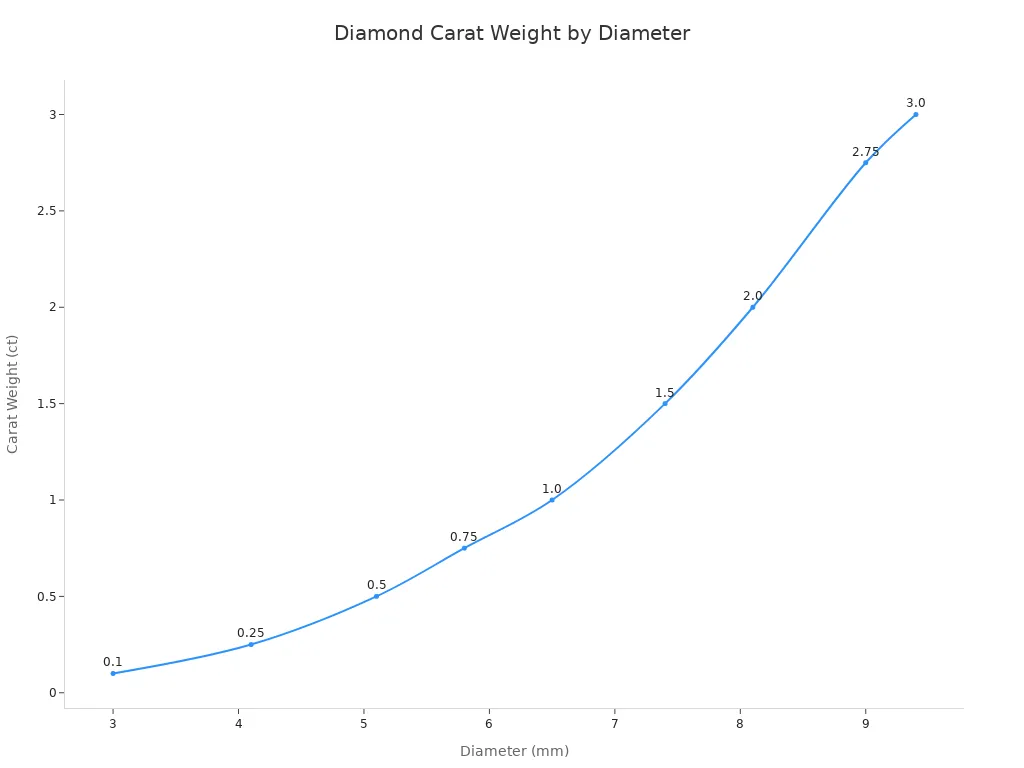
Reference photos and CAD files take away the guesswork. Share product category, reference photos, drawings, CAD files, target market, plating color, logo requirements, packaging ideas, and estimated quantity. A clear brief lets the manufacturer check feasibility and quote accurately. Sketches, mood boards, and physical samples all work as design references. Missing size, logo files, plating color, or quantity details slow sampling down.
Ask your supplier for a step-by-step guide to ordering bespoke jewelry. A good process runs in four stages. You submit sketches and reference images first. The supplier turns them into CAD design with revisions, so you see the piece before production. You refine details through those revisions. Then you move to gemstone selection, sampling, production, and delivery. Confirm each stage in writing, and your peridot design stays on track from approval to arrival. Check the CAD views carefully, since front and side views show raised and recessed areas. This habit protects both the look and the quality of the final jewelry.
Plan your schedule before you approve any design. The custom CZ and peridot design process from Chinese suppliers can take at least two months (60 days). Put that window into your launch date, and you avoid rushed decisions at every stage.
A sample order is your proof of concept. It shows whether the factory can match your approved spec in real materials. Test three things: stone match, setting security, and finish. The table below shows what each check covers.
Quality Aspect | Sample Order Test Item |
|---|---|
Stone match | Material matches the approved sample; dimensions match the approved technical drawing; thickness and edge profile are correct |
Finish | Surface finish is consistent |
Setting security | Stone components fit the supporting structure; fasteners and connecting hardware match the specification; product stands as intended on a level surface; required stability or structural tests completed |
Documentation/approval | Assembly instructions and accessories complete; photos and measurements recorded; buyer approval obtained before mass production |
Take photos and measurements of the approved sample. Keep that reference piece for repeat orders. For pieces that must look alike, approve the layout before cutting. Then review the overall look across the whole batch, not just each part alone.
Judge the sample against the spec sheet, not against your memory of a photo. Photograph the sample in natural daylight, not showroom lighting. Compare those images with factory production photos. Ask for a wet versus dry comparison, since color deepens when wet.
Ask for a side-by-side photo of the sample next to a randomly selected production piece. A refusal signals hidden batch variation. Get a written promise that bulk production matches the approved sample within ΔE ≤ 2.0 in CIE Lab color space. That one agreement removes most color disputes later.
Weigh quality against price at this stage. A sample that meets the spec justifies its price. A cheap sample that fails the stone match costs you far more in rework. Treat the sample fee as insurance for your peridot jewelry order. Confirm the peridot quality in writing before you release bulk production.
Ask for a cost breakdown before you compare quotes. Custom jewelry pricing has five parts: stones, metal, labor, plating, and packaging. Metal and gemstones often make up most of the total. For silver pieces, metal can be 40–70% of total production cost. Cubic zirconia adds a much smaller share than real gemstones. Labor covers casting, stone setting, polishing, assembly, and QC. Plating matters most on brass, which is almost always plated. Packaging is a separate cost line, so specify the bag, card, pouch, or box.
Use the table below to check a quote against the material you chose.
Material category | Typical ex-works cost per piece |
|---|---|
Simple brass fashion jewelry | $1–8 |
Simple stainless steel jewelry | $1–6 |
Simple 925 silver jewelry | $5–30 (weight & stone setting vary) |
G23 titanium body jewelry | $2–12 |
Watch for hidden costs. Sample and mold fees, extra plating thickness, CAD retouching, and compliance testing may sit outside the unit price. Ask what each fee includes and whether tooling can be reused. Compare landed cost, not factory price alone. Freight, insurance, and import charges change the real price of your peridot rings.
Minimum order quantities vary widely by supplier and material. Loose stone sellers may ask for 10 carats or 100 pieces, while bead suppliers may quote by weight. For finished custom pieces, expect this range:
Minimum Order Quantities (MOQs): Typically $500–$5,000; flexible for custom and long-term orders.
A lower MOQ does not always mean a cheaper launch. Setup costs spread over fewer pieces, and packaging carries its own minimum. Request quantity tiers on the same approved design and packing basis. Review every cost line before production starts, and confirm the peridot quality standard in writing. That habit keeps your jewelry budget predictable.
Each way to pay has its own good and bad points. Pick the method that fits your order size and how well you know the supplier.
Payment Option | Strength | Trade-off |
|---|---|---|
Bank transfer | Low fees on large sums | Weak recourse if a dispute arises |
Trade assurance platform | Funds held until you confirm terms | Platform rules and fees apply |
PayPal | Fast, familiar dispute process | Higher fees; limited for large orders |
New suppliers need the most protection. A trade assurance platform or PayPal keeps your money visible until you confirm delivery. Suppliers you know well often take bank transfer at a better price. Split big orders across two methods when you want both savings and a safety net. Whatever you pick, write the payment terms into the order contract, and keep every receipt in one folder.
Pay your money in steps tied to things you can check, not to calendar dates. This setup keeps your risk small at every stage of production.
Gate 1 – PO confirmation releases the deposit. The deposit pays for materials and a production slot, and nothing is made yet, so your risk stays limited.
Gate 2 – Pre-production sample approval allows production with no payment. Written sign-off catches wrong specs before bulk work starts.
Gate 3 – A mid-production inspection gives larger runs an optional checkpoint. It confirms the run is on track before it finishes.
Gate 4 – The balance releases against shipping documents such as the bill of lading. Final payment moves only once documents prove the goods reached a carrier.
The best payment structure is not the one with the smallest deposit at any cost. It is the structure that keeps meaningful leverage until the supplier has completed objectively verifiable performance.
Treat any percentage split as a label, not a promise. The milestone tied to each payment matters more. Link later payments to approved samples, inspection results, or shipping documents. Keep a meaningful amount unpaid until you hold proof that the key stage is done. Before you send the deposit, ask the jeweler to put the deposit scope in writing. Note which design details are approved and which are still open. Set review milestones for the peridot stones and settings. Keep every approval in one project record, and your quality expectations stay protected from the first payment to the last.
Your shipping choice is a trade-off between speed and cost. Air freight is the fastest way to send goods long distances, but it costs the most. On average, it costs about five times the ocean rate, so a $200 sea shipment might cost $1,000 by air. Air freight shortens China-US transit from 20–30 days by sea to about 3 days. Express couriers like DHL, UPS, and FedEx deliver door to door in under 5 days for shipments under about 1 cubic meter and 200 kg.
Mode | Cost | Transit Time | Best For |
|---|---|---|---|
Sea Freight | Lowest cost per unit; several times cheaper than air | 3–5 weeks (25–40 days) | Bulk, heavy, planned stock |
Air Freight | Several times more than sea; ~$4–$8 per kg | 5–10 days | High-value, urgent, light goods |
Express/Courier | Competitive for very small shipments | Under 5 days (door to door) | Small parcels, first orders |
Jewelry is a good fit for air freight. It is high in value and light in weight, so the extra cost buys speed without much weight penalty. Choose air when freight stays under 15–20% of goods value. Sea shipping is still the go-to choice for bulk and heavy goods. For a very small first order, a courier can be cost-competitive once you count consolidation and container minimums.
Build a three-layer packing system. First, protect each piece with acid-free tissue paper or soft cotton cloth. Use jewelry cards for necklaces to prevent tangling. Add a second layer such as rigid boxes or branded pouches. Finish with a corrugated outer box, recycled paper fill, and strong tape. Match packaging spend to product value using the 2–8% rule.
Insurance protects your peridot pieces in transit. Compare carrier policies on value limits, exclusions, tracking, and delivery times. For expensive items, third-party insurers often offer higher limits above $100,000, faster claims, and fewer exclusions. Buy coverage for the full declared value, read the terms, and request a signature on delivery. Discreet outer packaging also deters theft. These steps protect both the quality of your jewelry and your investment.
Customs clearance goes faster when your paperwork is complete before the shipment leaves China. Ask your supplier to send digital copies of every document early. That way, you can check each one for errors while the goods are still at the factory.
Document | Purpose / Notes |
|---|---|
Commercial invoice | Provided by the exporter |
Packing list | Itemizes shipment contents |
Bill of Lading (B/L, BOL) | Required for sea freight |
Air Waybill (AWB) | Required for air freight |
Entry Manifest (CBP Form 7533) | Customs entry form |
Country of Origin (COO) label | Must be affixed to goods or packaging before shipment |
Make sure the invoice value, piece count, and stone descriptions match your order. If the invoice and the packing list don't match, entry slows down. Confirm the COO label is on the goods or packaging before shipment, not on a separate sheet.
Children's jewelry has extra steps. A CPSC-approved testing company must check compliance, and then you as the importer issue a Children's Product Certificate (CPC). These items also need a CPSIA Tracking Label that shows company name, production place and date, and batch number. Plan this testing into your timeline, because it adds days before shipping.
Duty rates depend on the jewelry's material, construction, and declared value. Look up the correct tariff classification for your peridot pieces before you ship. Your freight forwarder or a customs broker can confirm the code and the current rate. Build that cost into your landed price, and your margin stays intact.
Taxes and broker fees add to the bill too. Ask your broker for a full estimate that covers duty, processing fees, and delivery charges. Compare that total against your selling price. A small surprise at the border can erase the profit on a first order. Budget a buffer, and treat the estimate as a planning tool rather than a final number.
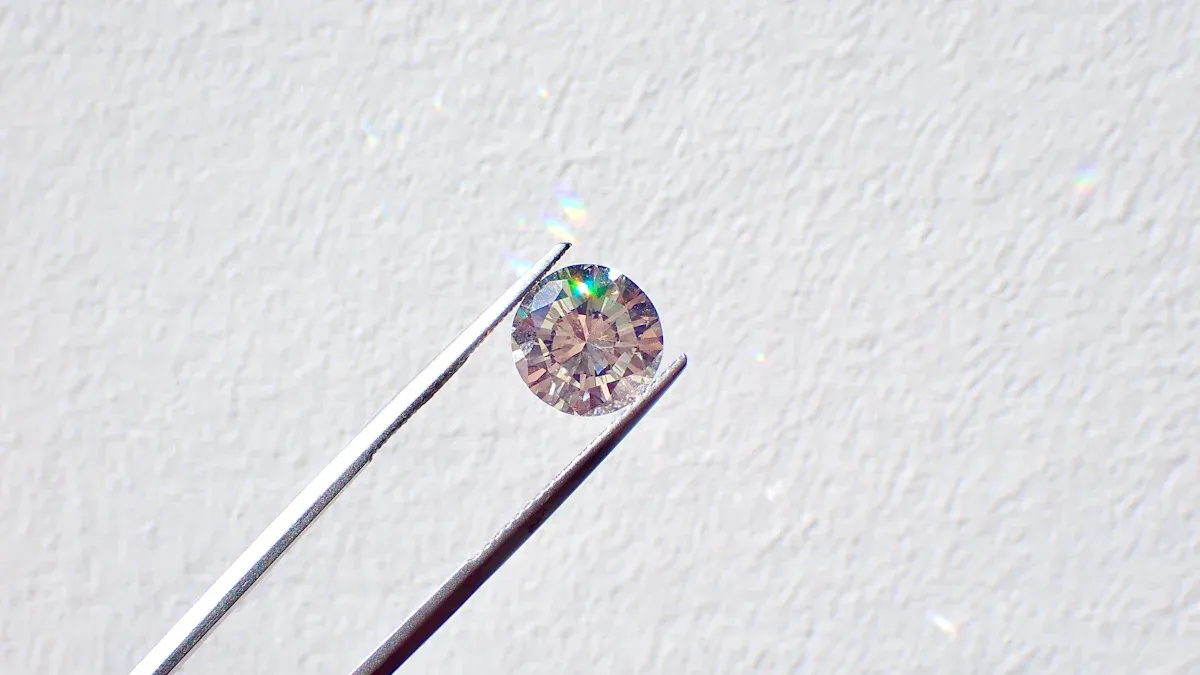
Book the inspection when production is mostly done and the goods are packed. This timing lets the inspector see the actual lot. Agree on AQL levels and the approved reference sample before anyone shows up, so defect limits are set ahead of time. Decide which features matter most to you, like function, appearance, packaging, or labeling, and give them more weight. Fix every problem before you release the balance payment, not after the cargo ships. Keep the report on file as a reference for any later dispute.
You can also do a remote video inspection through a high-definition call on WeChat or Zoom. Ask the factory rep to run these checks in real time:
Pull necklaces and bracelets with a calibrated pull-test gauge to confirm links and clasps hold under normal pressure.
Tap each piece near the microphone. A clicking sound means a stone is not seated right.
Ask for a 360-degree view under natural daylight around 5000K–6500K. This light shows waves, pits, or porosity that factory lighting hides.
Move the hinges and clasps, then confirm the invoice matches the final weight and material.
For orders over $10,000, think about a third-party service like QIMA. Their inspectors visit the factory and send a PDF report with high-resolution photos of every defect.
Compare the finished china custom peridot and cz handmade jewelry against your approved sample, stone by stone. Make sure each peridot matches the color and size you signed off on. Check that every CZ sits flush and level. Then check the measurements against the spec sheet.
Check | What to Confirm |
|---|---|
Stone match | Color, size, and cut match the approved sample |
Setting security | No movement, no gaps, prongs evenly spaced |
Measurements | Dimensions match the spec sheet |
Finish | Surface is uniform, plating is even |
Photograph each piece in daylight and compare the images with your sample photos. A loose stone or a short measurement means a quality problem you can still fix. Catch it now, and your peridot jewelry arrives ready to sell.
Set the after-sales terms while the goods are still in the factory. Once you pay the balance, you lose most of your power to negotiate. Ask for the terms in writing, and attach them to the order contract.
A clear return policy covers goods that don't match the order or arrive damaged. Normal wear and tear, plus personal-preference issues like smell, color, or style, usually fall outside coverage. Confirm how fast the supplier handles a claim. One supplier processes requests within 48 hours of receipt or inspection. Name your contact person and both channels, such as email and WhatsApp, so a problem reaches a real person.
After-sales dimension | What to confirm |
|---|---|
Replacement and return terms | Order mismatch or transit damage qualifies for exchange or return |
Exclusions | Abnormal wear and tear and personal-preference issues stay uncovered |
Processing timeline | Claims initiated within 48 hours of receipt or inspection |
Communication channels | Named contact, email, and messaging app |
A first order is a test run, not the finish line. Ask for updates at each stage, and keep every approval in one product record. That record holds CAD versions, specs, stone details, plating, and packaging for each SKU. It stops drift between runs.
Judge a supplier on more than the unit price. Compare total production value, including sampling cost, MOQ, lead time, defect rate, and logistics. Track quality consistency across batches: same metal color, dimensions, stone positioning, and finish on repeat runs. Count revision rounds before sample approval, and treat communication as a measurable process.
Confirm compliance documents for your market, such as REACH, RoHS, or third-party testing.
Tell stated capacity apart from capacity actually available for your order.
Raise volumes only after your peridot pieces are reproduced consistently.
Scale helps repeat orders. One factory reports monthly capacity of 8,000,000 pieces, 62 in-house designers, and 194 patents. Use those numbers as questions, not promises. Ask what share of that capacity serves your order at your quality level.
The ten tips make one workflow you can repeat. You research suppliers, study the peridot buying guide, specify designs, sample, negotiate, pay in milestones, ship, clear customs, inspect, and confirm after-sales terms.
Four habits matter most:
Sample first. Costs of roughly $20–$100 are cheap insurance.
Write down every specification in a formal purchase order.
Protect payments with escrow or Trade Assurance.
Start small with your china custom peridot and cz handmade jewelry order. Use the tips in order. Treat your first peridot order as a learning step. Careful peridot buying checks and steady quality checks build a dependable supplier relationship, and your peridot jewelry line grows.
Plan for at least 60 days for the custom design process alone. Add shipping time on top of that. Air freight takes about 5–10 days, and sea freight runs 3–5 weeks. Build both windows into your launch date before you approve any design.
Sample costs typically run about $20–$100. Treat that fee as insurance for your order. A cheap sample that fails the stone match costs far more in rework. Confirm the peridot quality in writing before you release bulk production.
The top pitfall is receiving "peridot-colored" glass instead of genuine peridot. Ask the seller to confirm authenticity in writing. Request a gem lab report when the price looks too low. Record the origin and treatment history for every stone you approve.
Pay in milestones tied to things you can check. Release the deposit at PO confirmation. Hold the balance until you approve the pre-shipment inspection and receive shipping documents. A trade assurance platform or PayPal adds a safety net for new suppliers.
Keep one product record for each SKU. Store CAD versions, specs, stone details, plating, and packaging there. Compare each new batch against your approved sample in daylight. Ask for a written promise that bulk matches the sample within ΔE ≤ 2.0 in CIE Lab color space. This habit keeps your china custom peridot and cz handmade jewelry consistent across runs, and steady checks protect every jewelry launch.

 EN
 English
 Italian
 Spanish
 Ukrainian
 Japanese
 Norwegian
 Portuguese
 Korean
 Russian
 French
 Danish
 German
 Arabic
 Back to List