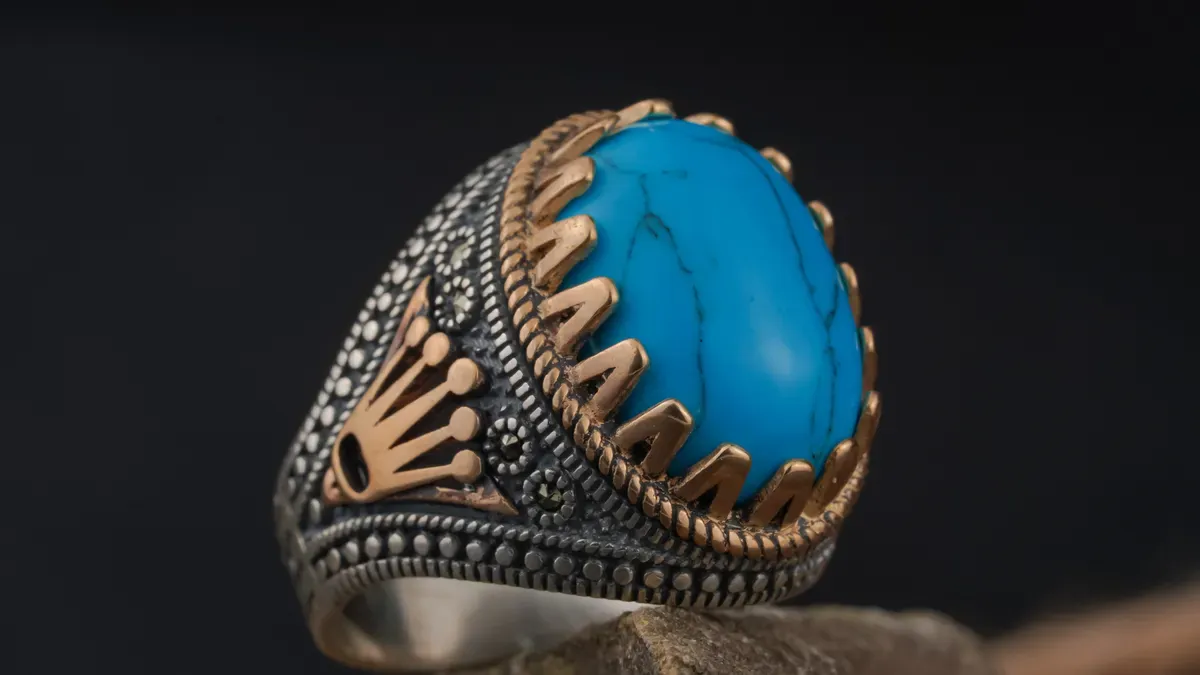
Reliability comes from a verification process you can repeat. You set the specs, make a short list of candidates, test their technical skills, and confirm compliance and costs. Then you check samples and audits before you sign. This guide gives you a practical checklist built around the criteria that matter most: handmade technique, gemstone sourcing and setting, customization capability, certifications, transparent pricing, and communication responsiveness.
Use it to avoid costly mistakes. A supplier may send a perfect champagne tone in May, then produce a reddish copper hue in August. Careful checks protect your budget, your timeline, and the quality of every handmade turquoise jewelry piece you order. Follow each step, and you can choose a partner for your China handmade garnet and turquoise jewelry service with confidence.
Write clear jewelry specs before you contact suppliers. This saves time and helps you avoid wrong quotes.
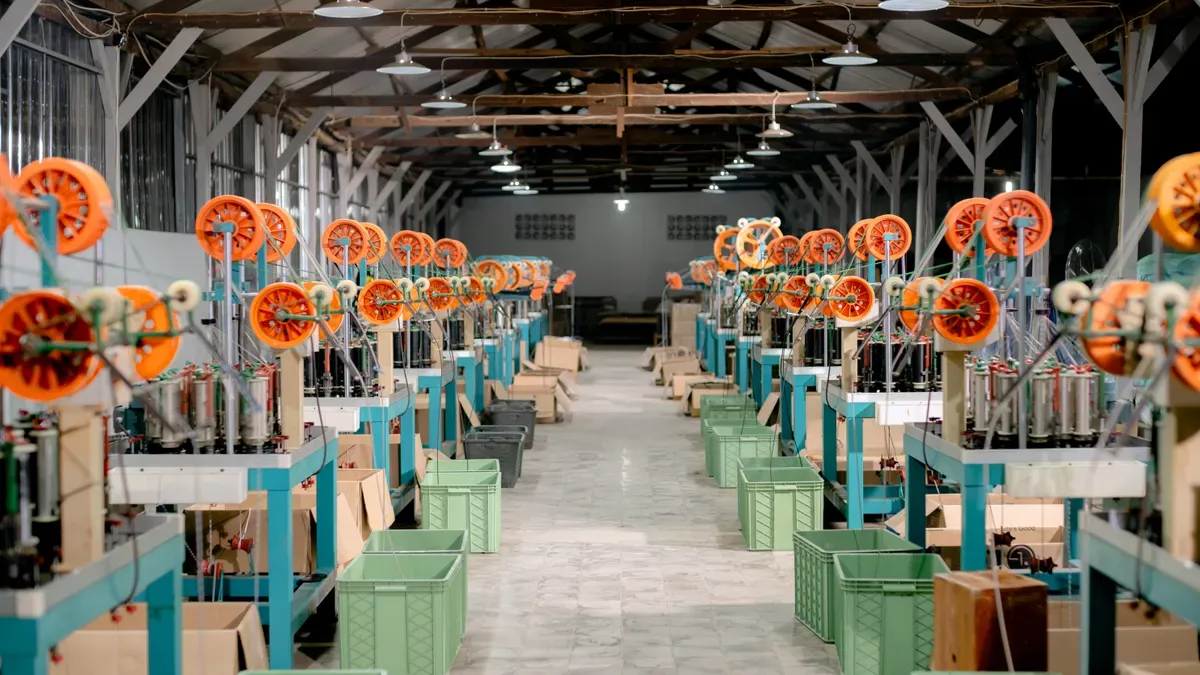
Check manufacturers by watching live video tours and looking at their business licenses. This helps confirm they are real factories.
Check their handmade skills by asking for videos of the stone setting. Also ask them to press the stones to make sure they are secure.
Check certifications and compare total costs to protect your budget and quality.
Begin with a small test order, and use step-by-step checks to keep quality steady.
Write your specs before you contact any supplier. A clear document saves time and prevents wrong quotes. Start with the metal: brass, stainless steel, or 925 sterling silver gemstone jewelry settings. Then record the garnet grade, size, and cut. Garnet rates Mohs 6.5–7.5, so note how durable you need it to be. Specify the exact cut, such as star cut or diamond cut, because each cut changes the design. For turquoise, note the matrix pattern and stone size, since these shape the handmade setting. Write down the stone color and layout, and match each gemstone color to a metal type.
Prepare your design inputs: CAD files, sketches, technical drawings, or prototypes. Ask for 360-degree digital sketches and 3–5 concept sketches before production. Request a face-to-face stone viewing to check quality and control color. Also list quantities, packaging, and the process stages you expect, from sampling to export. A good custom jewelry manufacturer will offer low-moq and custom manufacturing for your first run. This spec sheet becomes your baseline for every custom design and sample review.
Use three sourcing channels. Trade shows fit high-value, complex orders. B2B platforms suit broad searches and low moq trials. Referrals work best for verified partners. China hosts many manufacturers, so verify each one. A trustworthy jewellery manufacturer and gemstone jewelry manufacturer will welcome a live tour. Confirm the supplier is a real factory. Check the business scope on GSXT: verbs like 生产 (produce) or 制造 (manufacture) signal manufacturing, while 销售 (sales) or 贸易 (trade) signal trading only.
Then test the operation. Call on short notice and insist on a live video tour. Ask the manufacturer for unannounced views, such as the wall-mounted production plan. Check the business license on the wall matches your invoice. A real manufacturer typically shows 30–150 social insurance participants and RMB 1M–10M paid-in capital. A "manufacturer" with 4 participants and RMB 500,000 paid-in capital is likely a trader. This step protects your handmade jewelry and turquoise jewelry orders. Screen out these shells before you invest in sampling. Your handmade turquoise jewelry line deserves this care.
The metal you pick is your most important filter. Make sure the factory works with metals that suit both stones. Sterling silver is a good starting point for all stone types, including garnet and turquoise. Yellow gold makes garnet's warmth stronger, and rose gold adds warmth to red stones. White gold and platinum suit cool-toned stones, so they fit garnet and turquoise less well.
Hardness guides setting choices. Review this comparison before you approve any design:
Attribute | Garnet | Turquoise |
|---|---|---|
Mohs hardness | 6–6.5 | |
Relation to quartz threshold (Mohs 7) | Almandine and pyrope sit above it; demantoid below | Below it |
Setting and wear suitability | Acceptable with care; may show gradual surface wear over years | Occasional wear preferred; vulnerable to abrasion from household dust |
Care requirement | Store separately; avoid contact with harder gems and metal | Remove before washing, cleaning, or gardening; clean with a soft damp cloth only |
Bezel settings — a thin collar of silver pushed entirely around the gemstone's perimeter — offer superior protection for softer stones. This continuous metal wall shields the stone's edges from impact and is highly recommended for cabochon cuts and turquoise.
Where turquoise comes from affects both beauty and price. Sleeping Beauty costs more because it is rare and has an even sky-blue tone with little matrix. High-grade Kingman can be just as beautiful and is usually easier to find. Value follows color saturation, size, treatment status, and provenance. Natural, unstabilized stones cost 200–400% more than stabilized ones of similar color and size. The Sleeping Beauty mine stopped mining turquoise in 2012, so supply is limited and prices have risen steadily.
Test the factory's skill directly. Ask for a video of each setting, because photos rarely show a loose stone. Press each stone during inspection — it should not move. Check that prongs touch the stone at its widest point, that bezels fully enclose the edge, and that settings look symmetrical. Use a jeweler's loupe at 10x magnification to catch hairline cracks and prongs that float above the stone. Loose stones get worse fast: movement wears the metal, turning a simple tightening into a prong rebuild.
Then confirm customization and scale. Most fashion jewelry suppliers start at MOQs of 50–200 pieces per style, while high-end manufacturers may require 500 or more. Production usually takes 10–20 days depending on volume. Express shipping takes 3–7 days, air freight 5–10 days, and sea freight 25–45 days. A scalable jewelry manufacturing partner offers low MOQs and custom branding, so you can test a small trial order and scale up as volume grows.
Watch for red flags: vague answers about stone grades, no live video access, quotes far below market, and refusal to name the setting method. A strong gemstone jewelry manufacturer answers these questions with specifics and welcomes inspection.
Ask every candidate for its paperwork before you talk about price. The documents below prove different things, so ask for all of them.
Certification / Document | Purpose |
|---|---|
SGS reports | Independent proof that materials are real |
ISO compliance | Quality, environmental, and safety management systems |
Metal purity tests | Confirm precious metal content (e.g., 925 silver) |
Gemstone authenticity certificates | Prove gemstones are genuine |
QC documents and sample checks | Quality checks before production |
Third-party inspection | Extra assurance from an independent agency |
Strong manufacturers keep written quality systems (ISO 9001) and clear material-sourcing records. They also use XRF machines to check metal purity without damaging it. Confirm your manufacturer holds SGS verification, RJC membership, and Sedex audits. For sustainability, look for ISO 14001, ISO 45001, and Sedex 4-Pillar certification.
Then handle the export file. Follow these steps:
Get the correct HS Code from the factory early so the freight forwarder can figure out landed cost.
Ask for a Certificate of Origin — mistakes can cause customs delays, extra duties, or returns.
Confirm ISO 9001 or BSCI certification and a written defect-rate cap (usually below 2%).
Make sure you meet CPSIA (US) and REACH (EU) limits on lead, nickel, and cadmium. Refusing extra testing is a warning sign.
For US shipments, check 16 CFR Part 23 and the National Gold and Silver Stamping Act of 1906. For EU shipments, confirm REACH limits: cadmium below 0.01% by weight, nickel below 0.5 μg/cm²/week, and lead below 0.05% by weight. Precious metal items need hallmarks or a test certificate.
Compare landed cost, not unit price. Packaging, carton sizes, and freight make up a real share of the cost per unit. Two quotes with the same unit price are not equal if one item arrives carded and the other loose in a bag. Ask how many pieces per polybag, whether cards are included, and the carton sizes.
Region matters too. Many booths at Guangzhou's Taikang Jewelry Market buy goods from Yiwu, so Guangzhou prices run higher. For larger-volume fashion jewelry, Yiwu offers better cost-effectiveness.
Cost Factor | Guangzhou (Panyu) | Yiwu (Futian Market) |
|---|---|---|
Typical MOQ | 300–1,000+ pieces per design | As low as 1 dozen to 100 pieces per style |
Price point | Lower at volume; better margins for brands | Higher per-unit, but no volume commitment |
Customization | Strong — most factories do OEM/private label | Limited — mostly existing stock designs |
Best fit | Established brands scaling a jewelry line | New sellers testing what sells |
Do not assume Chinese jewelry is always cheap or low quality. Material choice drives price: S925 silver costs roughly 8–9 RMB per gram, more than copper, titanium steel, or alloy. Thicker electroplating raises the price but helps color last longer.
Validate with samples in rounds. Ask for samples as a low-commitment way to narrow down suppliers. Check parts, materials, dimensions, and fine details. Run lab testing for material composition. Compare them against samples from other suppliers.
Samples are made with focused attention, while mass production happens under pressure. The only way to keep sample quality and shipped quality aligned is pre-production batch inspection on the live line, plus during-production and pre-shipment quality control.
Treat one good sample as necessary but not enough. Write down your golden sample. Require a small pre-production batch on the actual production line, not in the sample room. If a supplier resists a live-line batch, that is a red flag. A mismatch between mass production and the sample means the factory cannot deliver. This step protects your handmade jewelry and turquoise jewelry orders, and it keeps your handmade turquoise jewelry line consistent.
A good contract protects your order before production begins. Write down your product and packaging specs. Add a bill of materials so the factory cannot swap in cheaper stones or metals. State that you own the mold once you pay the tooling fee, and the factory cannot reuse it for other clients. Ask for a full tooling refund after the order passes $3,000 USD. Set size variance at ±0.05mm and allow a ±3% over or under run on quantity.
Payment terms follow a clear pattern:
Pay a 30% deposit, then the 70% balance after inspection.
Pay sample fees upfront and credit them toward the first order.
Send money only to a verified company account, never a personal one.
Use platform escrow or PayPal for early orders.
Add clauses for IP protection, quality disputes, and arbitration. Tie payment to inspection results and set a warranty against factory defects.
Test communication before you commit. Send a detailed email and check that the reply matches your specs. Use WeChat for quick questions and video calls for deeper reviews. Schedule calls at times that respect the time difference. Clear, simple language prevents costly mistakes.
Build a quality control plan around staged inspections. Run a Pre-Production Inspection to check stones and metals. Add a During Production Inspection once a large share of the order is made. Finish with a Pre-Shipment Inspection at 100% completion and at least 80% packing. A Container Loading Inspection confirms the count. Ask for traceable SGS and ISO documents tied to your production run.
Start with a small trial order. This low moq step lets you test a manufacturer's handmade jewelry before you scale. Many buyers then grow into a long-term china handmade garnet and turquoise jewelry service. A reliable partner for your china handmade garnet and turquoise jewelry service welcomes audits. That same china handmade garnet and turquoise jewelry service should also pass a live-line batch check. Choose a china handmade garnet and turquoise jewelry service that treats verification as normal.
You now have a process you can repeat. Set your specs, make a short list of manufacturers, and test their handmade skills. Check compliance and costs, then confirm with samples and a live-line batch. Finish with a clear contract. Each step builds on the last, and together they form your due diligence.
Treat verification as an investment. It protects your quality, your budget, and your timeline. Start with a low moq trial order before you scale. This small step shows you how a factory performs under real production pressure.
Look ahead to a long-term, transparent partnership. A strong partner shares stone grades, welcomes audits, and keeps your handmade turquoise jewelry consistent order after order. That trust turns a single turquoise jewelry run into a reliable supply of quality pieces.
Most fashion jewelry suppliers start at 50–200 pieces per style. High-end manufacturers may ask for 500 or more. Ask for a low MOQ trial run first. That small order lets you test quality before you commit to a larger turquoise jewelry collection.
Ask for a video of each setting step. Press every stone during inspection. It should not move. Check prongs and bezels with a 10x jeweler's loupe. Loose stones wear the metal fast, so catch them early.
No. Samples get focused attention, while mass production runs under pressure. Request a small batch on the live production line. Compare it to your golden sample. This step keeps your handmade turquoise jewelry consistent from order to order.
Pay a 30% deposit, then the 70% balance after inspection. Send money only to a verified company account. Use escrow for early orders. Tie the balance to inspection results, and add a written warranty against factory defects.
Production usually takes 10–20 days, depending on volume. Express shipping takes 3–7 days, air freight 5–10 days, and sea freight 25–45 days. Confirm the schedule in writing before you place your turquoise order.


 EN
 English
 Italian
 Spanish
 Ukrainian
 Japanese
 Norwegian
 Portuguese
 Korean
 Russian
 French
 Danish
 German
 Arabic
 Back to List