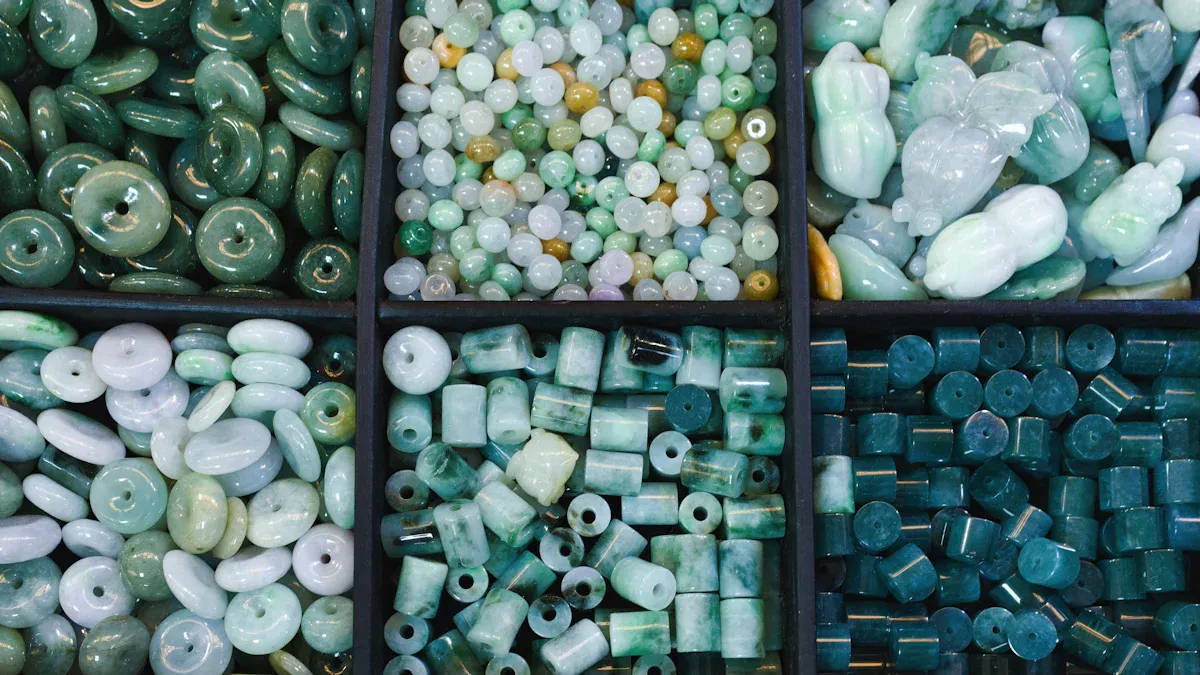
A China jewelry supplier with stable gemstone sources shows this through documented mine-to-market traceability, direct ties with mines or cutting centers, third-party certifications, consistent inventory, audited export records, and transparent lot pricing. You can find these suppliers at Hong Kong trade fairs, on online directories, through industry associations, via referrals, and through checked buying agents.
Before placing an order, verify lab certificates, request sample lots, conduct factory audits, review export records and references, and agree on supply-continuity clauses. These steps help prevent quality drift, late deliveries, and hidden substitutions.
A reliable jewelry manufacturer in China welcomes this level of due diligence. China rewards careful buyers. Start with small trial orders and scale up only after consistency is proven.
Look for written mine-to-market traceability. Direct ties to mines or cutting centers show a stable gemstone supply.
Ask for third-party lab certificates from GIA, IGI, NGTC, or AIGS. Compare grades across sample batches to keep quality steady.
Go to the trade fairs in Hong Kong and Shenzhen. See the stones yourself to compare suppliers, prices, and quality.
Check export records, financial stability, and factory operations before making large payments. Responsible suppliers welcome this review.
Start with small test orders across batches. Scale only after grades, pricing, and communication are consistent.
Judge a China jewelry manufacturer on proof points that impact your future orders. Look for written mine-to-market traceability, direct ties to mines or cutting centers, audited export records, and stable finances. Clear lot pricing and guaranteed repeatable grades finish the list. These factors give you control over pricing and supply.
Traceability begins where stones are mined or cut. A China jewelry supplier with stable gemstone sources can show where each rough stone comes from. Records cover country, mining method, and handling until the final gem. This openness lowers compliance doubt. Cross-border trade needs clear origin records.
Direct sourcing makes supply steady and delivery reliable. A maker that buys from miners or cutting centers skips middlemen. This shortens China's jewelry supply chain. A shorter chain gives you first pick of better lots. A stable resource buying system can give design and production teams steady, efficient supply.
Direct ties also make grading more consistent. When you order a calibrated ruby, the supplier knows its source. They can match color and clarity in a predictable way. This dependability matters in jewelry production. Changes cause re-cut choices and hold up approvals. A supplier with mine ties limits those changes and keeps lead times steady.
Independent labs check supplier claims. Ask for certificates from NGTC or another accredited national or international laboratory. These labs use standard quality grading rules. In China, national standards guide quality. GB/T 16554 covers diamonds, and GB/T 32863 covers ruby. NGTC is a state-designated lab that applies these standards to exports. This gives a reliable starting point for every order.
Lot consistency rests on these lab standards. Ask for certificates from many production batches. Compare grades for color, clarity, and origin. This shows if a supplier keeps steady grades over time. Certificates also split natural stones from lab-grown ones. Standard Q/NGTC-J-SZ-0001 keeps these groups separate. This guards you against false origin claims.
Certifications cover more than gemstones. Metal purity rules like GB 11887 keep finished jewelry up to quality standards. Ethical certifications matter too. RJC membership documents responsible supply-chain certification, and ISO certification documents independent quality management for production facilities. For you, these checks mean less risk. A certified supplier in China changes from an unknown into a proven partner for stable gemstone buying.
Begin with written proof. A China jewelry supplier with stable gemstone sources gives you six clear signs:
Written mine-to-market traceability
Direct ties to mines or cutting centers
Audited export records
Stable finances
Transparent lot pricing
Guaranteed repeatable grades
Each proof point guards a separate part of your order. Traceability protects origin claims. Clear pricing protects your margin. Steady grading protects final quality.
Top suppliers carry independent documents. Take a manufacturer with factories in Shunde and Shenzhen. This exporter displays several visible certifications.
Documented proof point | Relevance to your order |
|---|---|
RJC membership | Confirms responsible supply-chain certification for jewelry production. |
ISO certification | Documents independent management certification for production facilities. |
T-Mark traceable diamonds | Documents a branded diamond traceability program with mine-to-retail tracking. |
Proprietary blockchain system | Documents customer-accessible history of a diamond from mine to retail. |
See what the table shows. Many China jewelry makers share these certificates. But the table lacks direct mine contracts. Ask for those documents. This difference matters because certificates prove records exist, while direct mine ties prove first access.
Direct buying begins at the mine or cutting center. A China jewelry maker lists the country for every rough stone. The record lists mining method and handling steps. That record makes customs clearance easier. It also backs your marketing claims. Buyers more often ask for origin stories. A written origin answers them right away.
Look for supply chain integration. A company with strong integration can match color across batches. It can set aside better lots before the open market sees them. A stable resource buying system can feed design and production teams with steady material.
Buying raw materials with direct ties shortens the chain. A shorter chain means fewer substitutions. It also means quicker answers to design changes. Custom jewelry work needs this stability most. Your retailer expects a certain ruby color. Direct mine ties make that promise real.
Independent labs check every claim. Ask for certificates from NGTC or another accredited national or international laboratory. These labs use standard grading rules. National standards guide quality in China. GB/T 16554 covers diamonds. GB/T 32863 covers ruby. NGTC works as the state-designated lab. It applies these standards to exported goods. Precious metal purity has separate rules. GB 11887 ensures consistent precious-metal purity reporting for finished jewelry.
Certificates also separate natural stones from lab-grown ones. This separation protects origin claims. Compare certificates from many batches. Check color, clarity, and origin across them. Repeated results show quality control. They also show financial strength. A factory that buys cheap stones in small lots cannot show steady grades.
Certifications also cover responsible manufacturing. RJC membership documents responsible supply-chain certification, and ISO certification documents independent quality management for production facilities. These checks lower your compliance risk. A certified maker in China turns from an unknown into a trusted partner for gemstone buying.
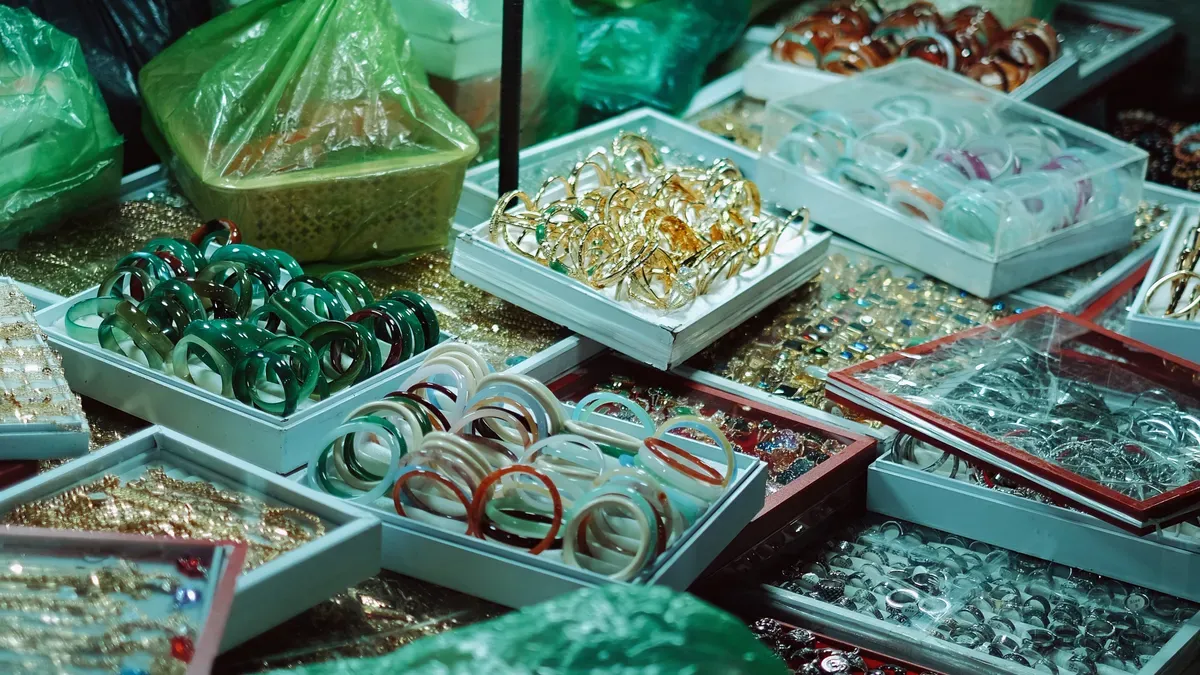
China gives you several ways to find a steady gemstone supply. You can meet suppliers at trade fairs, visit markets, or use checked directories. Seeing stones in person is still the best first proof.
Hong Kong holds the best fairs for buying gemstones. The September Hong Kong fair is one of the biggest upcoming events for colored stones and jewelry. Chinese dealers and buyers shop there to stock up and invest.
The Hong Kong International Jewellery Show in March is a big event. It has special areas for colored stones, diamonds, pearls, and finished jewelry. You can meet Asian makers, look at stones, and check prices on site. These fairs offer a unique in-person chance to check quality, compare sellers, bargain in real time, and build contacts.
Online directories broaden your search, but you must check them yourself. Large online directories list many jewelry makers in China. These platforms help you find a wholesale or custom jewelry maker fast. A listing alone does not prove direct mine ties. You still need to check certificates, export records, and references.
Associations and buying agents provide extra checks. A buying agent can visit a warehouse and verify paperwork. Industry groups link you to approved factories in China's jewelry production hubs. Import records can help identify gem houses that maintain steady stock.
Cross-border trade is a primary balancing mechanism for gemstone supply and demand, so direct mine access needs paperwork. Without invoices or mine records, an origin claim means little. For China jewelry wholesale, pair market visits with independent checks. This routine shows which suppliers keep steady stone quality.
Before you believe a claim of stable gemstone sources, make a checking plan. Start with certificates, sample lots, and references. Then move to factory audits, export records, and contracts. Each step adds proof. Together, they show steady quality and lasting reliability.
Find out exactly who gave the certificate. Write down the full lab name, official website, report type, report number, and issue date. Type the lab's web address yourself. Do not use the seller's link or QR code. Put the report number into the official verification field. Match the online record with the printed report. Check the report number, date, quantity, size or measurement range, weight, shape, color, and loose or mounted status. Look at the photo. Make sure the report matches the item in your hand. A real report number can be copied or attached to a similar-looking stone.
Inside China, look for legal approval marks such as the CMA. Check security features too. Holographic labels, embossed seals, gemologist signatures, printed QR codes, and tamper-proof laminate all help. Choose well-known national or international labs. Be careful with small or unknown labs. Some issue certificates from photos alone for a few dollars. Real labs need the physical item.
Then order sample lots. Ask for stones from multiple batches. Compare color, clarity, cut, and origin across them. Repeated results show strict quality control. Treat every certificate as useful but not perfect. Ask for video verification or an independent appraisal if a difference remains.
Call client references. Ask whether grades stayed steady over repeat orders. A jewelry manufacturer in China with steady sources earns long-term buyers. For custom jewelry manufacturing, references confirm both design and production consistency.
Sample lots do not show the whole picture. Visit the factory or hire an auditor. During an audit, check these areas:
Export records: Compare old customs data with export claims. Review US/EU export volume, destinations, export licenses, product safety certificates, and environmental compliance records.
Financial health: Check corporate beneficiary bank accounts. Treat Hong Kong or offshore accounts as risky. Cross-check payment pathways and invoices.
Legal profile: Review court rulings, contract disputes, tax credit ratings, and regulatory enforcement records.
On-site operations: Confirm business licenses, registration numbers, and issue dates on official documents. Check production flow and active orders.
A factory with few active customers can close without notice. Independent audits before large deposits help prevent financial scams. Experienced China jewelry manufacturers show export statistics. Yet some jewelry manufacturers with export experience still fail audits. Export experience alone does not guarantee stable supply.
Finish with a supply-continuity clause. Put penalties in writing for delays, substitutions, and quality drift. Define acceptable gemstone grades in the contract. Keep the model, material source, and batch traceable. Test again whenever a material or process changes. State whether stones are natural, lab-grown, or glass and list any treatments. Check that the supplied documents match that specification.
This whole process turns a China jewelry supplier with stable gemstone sources from a slogan into proof. The right jewelry manufacturer welcomes audits and signs clear terms. That willingness signals reliability. It also secures your long-term gemstone supply.
Stay alert for suppliers with missing documents, unclear certificates, changing grades, unrealistic prices, or audit resistance.
Suppliers who cannot explain alloy composition, plating method, sample lead time, or rework policy lack control. Makers who hide whether stones are natural, lab-grown, or imitation also lack control.
Be suspicious of natural gemstones sold with no independent certificate. A cheap piece should carry clear synthetic labels.
Trust verifiable gemstone reports from accredited national or international laboratories such as NGTC. Look for the words "natural" and the lab name. Use the official portal to check the report number. Missing or weak certification often hides synthetic gemstones. This is a major red flag.
Compare samples from many batches. If photos do not match samples, bulk deliveries may not match approved samples. Common complaints are poor quality, slow replacements, and color mismatches. A third-party inspection before shipment from China puts that risk back on the supplier.
Unrealistic prices signal trouble. A bargain price in China sourcing is a red flag. Check quotes against independent price benchmarks and published market data. Diamond prices can vary significantly depending on the certificate, and some wholesale markets post inflated opening quotes, so compare actual transaction prices.
Audit resistance is the last warning. Refusing to give certificates or stock images, avoiding live calls, or pushing for full payment before delivery removes buyer protection. No verifiable business registration means a short-term operation. Hidden costs like sampling fees, logo cards, polybags, and export cartons make the low price misleading. Very small MOQs can raise unit cost and cause shade variation. These signs point to unstable supply, so protect your quality by walking away.
Look for traceability, direct sourcing, third-party certifications, and verified operational controls. That's what defines a China jewelry supplier with stable gemstone sources.
Start with small trial orders, test lots across several batches, and compare color, clarity, and lead times. Scale only after the supplier proves consistent quality, steady pricing, and clear communication. The right jewelry manufacturer welcomes audits and shares documents openly.
Before large commitments, use the verification checklist and negotiate supply-continuity contracts with penalties for delays or substitutions. This approach protects quality and supply, and a verified partner in China becomes a long-term asset. China sourcing works when you verify every claim.
Look for written traceability, direct mine ties, third-party certificates, and audited export records. You want a partner whose quality stays steady across batches. Ask for sample lots and compare their grades. This proves supply stability before you make large orders.
Accept reports from NGTC or other accredited national or international laboratories. Check each number on the lab’s official website. Do not trust seller links or QR codes. Compare the report photo with the stone you hold. Independent labs grade color, clarity, and origin with national standards. That keeps quality claims truthful.
Trade fairs let you see stones in person. You can compare suppliers, check prices, and meet people. Hong Kong’s major fairs are held in September and March. Seeing stones yourself helps you confirm that online claims match real quality. Then order test lots from your top suppliers.
Order sample lots from multiple batches. Compare color, clarity, cut, and origin for every batch. Repeated results mean strong control. If grades drift between lots, the supply is not stable. Scale up only after the China partner proves reliable over time.


 EN
EN
 English
  Italian
  Spanish
  Ukrainian
  Japanese
  Norwegian
  Portuguese
  Korean
  Russian
  French
  Danish
  German
  Arabic
  Back to List