It's hard to pick from so many options when you look for a china professional jewelry design and cad service. A careful review makes the choice easier. Five checks cover the whole decision: technical performance, application fit, compliance, cost, and a structured evaluation process.
Technical performance — the provider's software skill, design accuracy, and prototyping workflow.
Application fit — proven experience with your jewelry category and your growth plans.
Compliance — certifications, design file security, and export documentation.
Cost — pricing models, hidden fees, and total value.
Evaluation process — how you check candidates, look into references, and run a trial project.
This post explains what to look for under each check and which red flags to avoid.
First, check the provider's technical skills and how accurate their designs are.
Pick a provider whose experience fits your jewelry type and your plans to grow.
Check certifications and file security to protect your brand.
Make sure you know all the costs and hidden fees before you agree to anything.
Try the provider out with a small test project, and ask for references.
Experience is the first sign of technical performance. Look at the provider's portfolio for different examples, then read customer reviews. A strong portfolio shows range across ring styles, pendants, and complex settings. Reviews show how the team handles revisions and deadlines.
There are dozens of CAD software options, from general modeling tools to special jewelry programs. Picking the right CAD software matters because each tool shapes accuracy and speed. RhinoGold offers flexibility and customization. MatrixGold suits advanced professionals. JewelCAD feels easy to use and jewelry-focused. ZBrush is great at organic, artistic designs. Blender is free and powerful, but it takes a long time to learn. Some software companies also offer certification programs. Treat those certificates as real proof of professional-level skill.
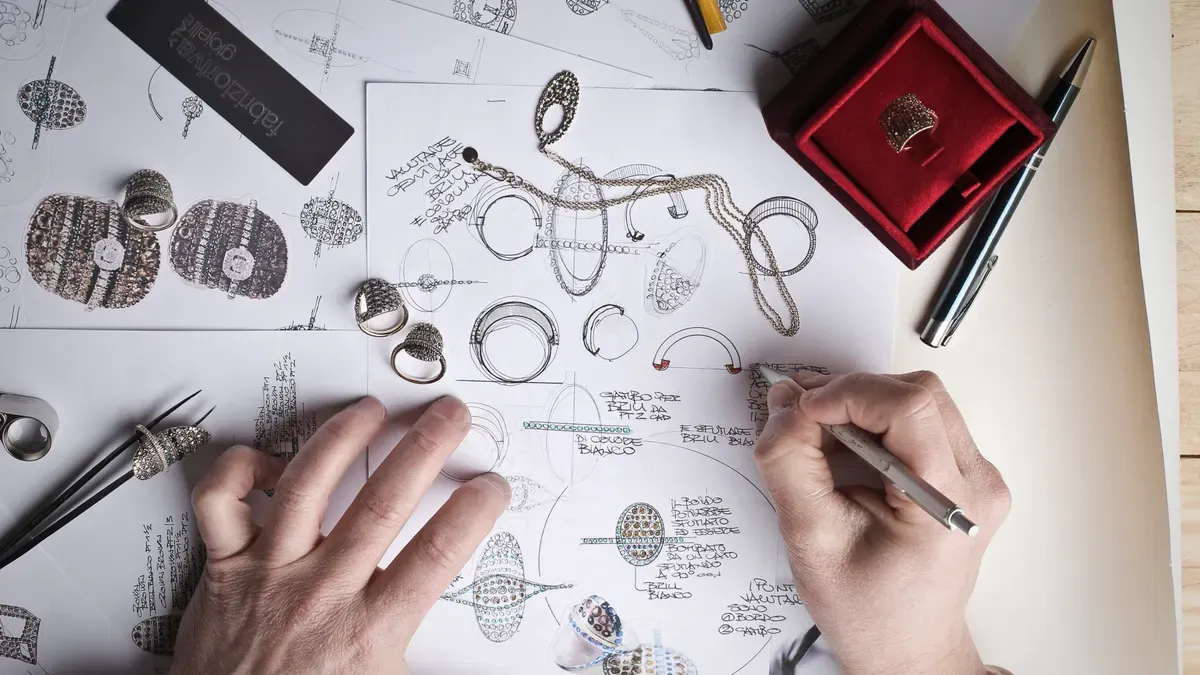
Precision separates good computer-aided design from guesswork. A skilled cad designer models stone setting clearances exactly, so the 3D model accounts for the metal volume each stone needs. That precision also produces a more accurate quote. The designer refines seats for round, oval, marquise, emerald, or pear-shaped stones and checks prong thickness and placement in the digital environment first. Engineering principles enter the work too: structural stress points and geometric symmetry get calculated, not estimated. High-level 3d renders then simulate metal polish and show how light interacts with faceted gemstones. Professional-grade tools give designers large libraries of stone shapes and setting styles for very complex geometry.
Ask which formats the provider delivers. Common outputs include .stl and .iges, though each product on the market has its own interpretation of the .iges format. Confirm the cad file opens cleanly in your downstream systems before you commit.
The CAD-to-prototype workflow confirms the design meets specifications. A typical digital workflow moves through concept and CAD modeling, file preparation and build orientation, support generation, printing, part removal and post-processing, then inspection and final finishing. Final quality depends on CAD model accuracy and clean geometry, material matched to cast or direct-metal use, a calibrated machine with correct build orientation, controlled casting or sintering parameters, and consistent hand finishing and inspection.
A printed physical model lets you check proportions, stone placement, and wearability before casting. Design for additive manufacturing usually comes down to minimum wall thickness for hollow parts, escape holes so uncured resin drains, tolerances between moving components like hinges, and support placement that protects fragile details. Cadblu reports that a resin model can be ready within a few hours and a finished jewelry deliverable the next day, with tighter dimensional accuracy on cast patterns and faster resizing across product lines. Keep the original CAD file, track material and process parameters, and inspect the first article before repeating a design across a production run. The full chain of cad, casting, stone setting, and finishing must hold up together. Request cad drawings and drawings of critical dimensions alongside the model, and validate with a representative sample part before scaling.
Match the provider to your jewelry type before you compare anything else. Fashion lines need speed and low unit costs. Fine jewelry demands precise stone setting and metal control. Bridal work rewards tight design discipline and repeatable sizing. Trend-driven collections live or die on how fast a provider moves from sketch to shelf. A studio that excels at one category may struggle in another, so ask for examples in your specific segment.
Experienced jewelry professionals in China bring deep expertise in both craftsmanship and design. Programs that mix industrial arts and gemology train designers in cultural knowledge and technical skill. These designers know how a setting acts in production, not just how it looks on screen. That mix helps you avoid designs that look good on screen but fail at the bench.
Ask each candidate to show work in your category. A custom fine jewelry manufacturer with bridal experience will handle prong work and sizing differently than a firm focused on fashion pendants. Review the portfolio for range, then read customer reviews for how the team handles revisions and deadlines.
Perfect Jewelry is one neutral example of a provider that turns trends into scalable collections. The company has designed, produced, and exported jewelry since 2002, and it moves fast, high-margin trends into repeatable lines. A design-only studio fits best when you need fresh concepts and plan to source production elsewhere. A full-service manufacturer fits best when you want one partner for design through shipping. Match the model to your needs.
Custom jewelry has trended for years, and Stuller notes the demand is not slowing down. Building a full custom manufacturing operation in-house can be complex, time-consuming, and a large investment. Many brands instead partner with a professional jewelry factory that already has the capacity.
The online market adds pressure. National Jeweler describes the challenge as delivering bespoke jewelry at scale, where retailers must balance personalization with efficient, consistent production. Traditional manufacturing often lacks flexibility for custom requests, and quality can suffer when speed wins. Plan your one-piece jewelry design workflow so the first sample proves the process. Then scale custom jewelry designs across a collection without losing consistency. A provider that handles one-piece customization well gives you a repeatable path for custom jewelry manufacturing.
Compliance keeps your brand, your designs, and your shipment safe. Check the paperwork before you sign a contract.
Ask for the certificate list first. SMETA audits and RCS certifications are now basic requirements for many brands, according to Perfect Jewelry's industry overview. SMETA shows that an auditor has checked a site against a recognized standard. RCS shows that recycled content is truly used in production. Technical Evaluation confirms a factory meets set technical rules. BSCI, ISO 9001, SGS, RJC, and WCA credentials also count as proof of a well-run operation. Perfect Jewelry holds SMETA, RCS, and Technical Evaluation certifications. Think of each certificate as a market-access tool: buyers in some regions will not place orders without them.
Design files are your intellectual property. Ask for a written agreement that names who owns the CAD files, the renders, and the production drawings. Ask how the provider stores files, who can open them, and whether they delete or return them at project end. A chinese jewelry factory that answers these questions clearly has a process. Vague answers are a warning.
Jewelry usually falls under HS codes 7113–7117, per Chinatopfreight's shipping guide. Your declaration must state the metal type and the gemstone content. Customs may ask for invoices and receipts to confirm value. Import duties vary by country, and destination VAT or GST applies on top.
Prepare the core document set for every shipment:
Document | Purpose |
|---|---|
Commercial invoice | Details product value and buyer/seller information |
Packing list | Lists contents, weight, and package dimensions |
Certificate of origin | Verifies jewelry origin |
Export declaration | Filed to Chinese customs |
Insurance certificate | Confirms shipment coverage |
Waybill or airway bill | Proof of transportation contract |
Appraisal report | Required for high-value pieces |
Loose diamonds need a Kimberley Process certificate. Coral or ivory pieces almost certainly need CITES permits. Build these checks into your jewelry manufacturing schedule early, so paperwork never delays a launch.
Providers charge for CAD work in a few different ways. Some charge for each design, some by the hour, some for each revision, and some give one fixed price for the whole project. Each way fits a different buying situation. Paying per design works well for simple pieces you make again and again. Paying by the hour fits open-ended development work. Paying per revision rewards a clear brief. A fixed project quote works best for full collections.
Published rates give you a starting benchmark. Metalonyx reports that a jewelry CAD file usually costs $20 to $300 per design. Simple designs run $20 to $60, medium designs run $60 to $150, and complex designs run $150 to $300 or more. Freelancers may start at $20 or $30 for a simple design, while professional studios charge $100 to $300 or more. Many studios quote per project instead:
Our pricing depends on the scope and complexity of the project. We offer competitive rates for high-quality work. Please contact us with details about your project, and we'll provide a tailored quote based on your needs.
Ask about revision limits, rush charges, file-format conversion, and prototype costs before you sign. Software maintenance is another line item. Orchid Ganoksin forum members describe yearly maintenance fees of 15 to 25 percent of the purchase price. They also describe upgrade-only models that charge around 30 percent or more per major release, plus hybrid plans. One buyer paid $6,000 for a package and then got a $1,700 bill for the second year of maintenance. Request a cost breakdown and question charges for bug-fix patches.
Value means total cost measured against accuracy, revisions, and delivery reliability. A LinkedIn post from Rahul Dholakiya notes that a 1% error in CAD can become a 20% delay in production. Most revisions start before design begins, when the brief is unclear. Judge a provider by how consistently the process delivers, not by how fast one file arrives. Selecting the right cad software and a disciplined partner protects your margins across custom jewelry manufacturing runs.
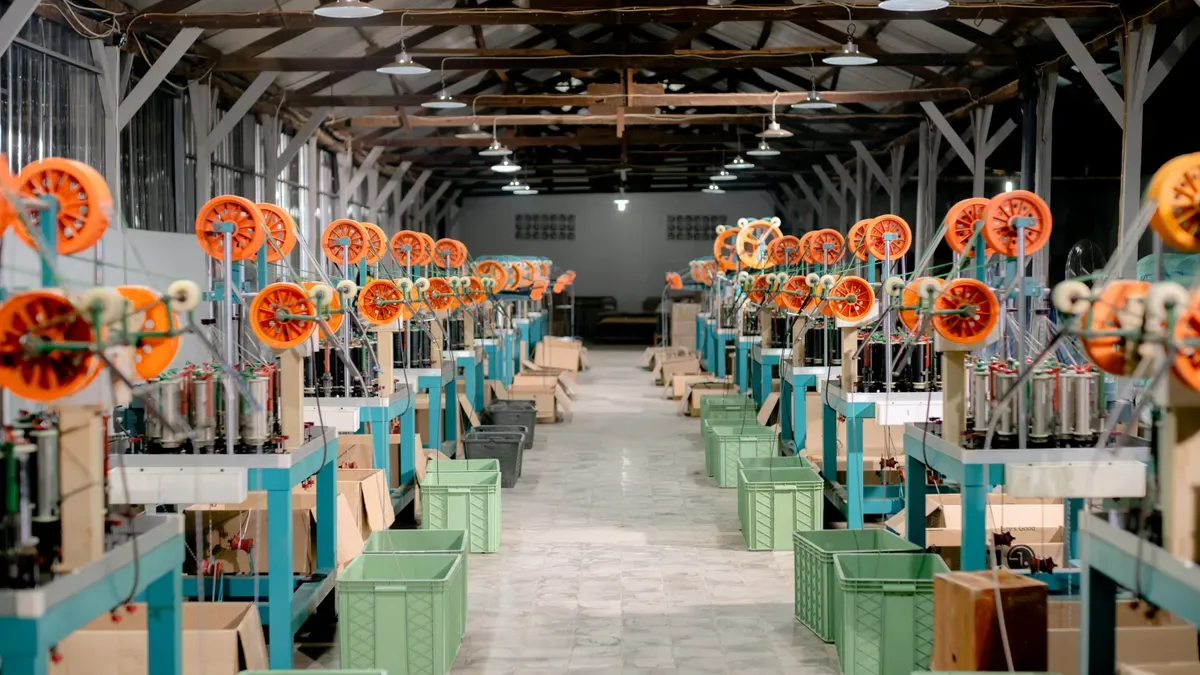
A clear factory or manufacturer evaluation protects your budget and timeline. Ask every candidate the same questions. Lianmei's high-volume manufacturer checklist gives you a solid base:
What is your current monthly production output for this product category?
What equipment and staffing do you have for casting, stone setting, plating, and finishing?
What is your maximum capacity without adding shifts or subcontracting?
Can you provide third-party material compliance test reports for the past 12 months?
What are your QC checkpoints from raw material to final inspection?
How do you track and report defect rates on production runs?
What are your standard tolerances for plating thickness, stone setting, and dimensions?
What is your normal lead time for a high-volume order, and what causes delays?
How do you handle a defect or rework request after production has started?
Can you provide three references from brands with similar order volumes?
Use the same evaluation on every china professional jewelry design and cad service you shortlist. Check how many years they have been in business. Verify certifications such as SMETA, RCS, or RJC credentials. Review the portfolio for past jewelry design projects and custom jewelry design work. Read reviews on industry sites like JCK or HKTDC. Make sure the team explains its jewelry design process clearly and is open about materials and pricing. A china professional jewelry design and cad service should also show a cad model and a cad review before you commit.
When you work with jewelry factories in china, focus on design files, production steps, quality control, and shipping. Put key product choices in CAD files, tech sheets, and written production notes. Talk about intellectual property early. Ask how the factory handles your files, including privacy and ownership. A good cad designer asks about stone sizes, metal thickness, and finger size before modeling starts. A provider who skips those questions almost guarantees mistakes. Most jewelry factories in china welcome that scrutiny, and strong jewelry manufacturing partners prove it.
Start with a small trial project. Run a paid sample order that matches your target specification for materials, finish, and packaging. Inspect it against your design file and the factory's stated tolerances. Measure the sample before you approve it:
Weigh it and compare the result to the spec sheet.
Check plating thickness with a testing service if the order justifies it.
Pull on a stone setting to see if anything moves.
Write down those measurements in the approval email.
Visit the factory or arrange a video walkthrough when possible.
During the walkthrough, check whether the claimed equipment and staffing match reality. Ask to see QC records from a recent production run. Request three references from brands with similar volumes, then call them. A reputable factories partner answers without hesitation.
The sample evaluation process also covers renders and prototypes. A render shows the intended design digitally. A printed prototype helps assess form and scale. A finished metal sample lets you review the physical jewelry. Agree on the views and measurements you need before the sample evaluation process begins. Confirm whether the quote includes a printed model, finished metal sample, stones, finishing, and delivery.
Watch for red flags during every review:
Red Flag | What It Signals |
|---|---|
Vague revision terms | Disputes later |
Refusal to share references | Unverified claims |
Unclear file ownership | IP risk |
Weak CAD work | |
Files with paper-thin claws when printed | Poor design accuracy |
"24-hour guaranteed delivery" offers | Copy-paste work |
Accountability risk |
A clean sample evaluation process builds trust. A rushed one hides problems until production. Shortlist each china professional jewelry design and cad service, then test the process with a trial. Pick the right factory by testing the process first. Scale designs through to production with confidence across jewelry manufacturing runs. The right factory for your category may differ from the right factory for your volume, so match both.
You now have a five-part framework: technical performance, application fit, compliance, cost, and evaluation process. Each check answers a different question, and together they cover the whole decision.
Start by making a short list of providers. Next, ask for samples. Then check compliance and pricing before you commit. Finish with a small trial project, and measure the result against your spec sheet.
Remember that jewelry type, order volume, and target market drive the right choice. Price alone tells you little. A provider that fits your category and your growth plans will serve you better than the cheapest quote. Use the same evaluation on every candidate, and let the trial project confirm your evaluation before you scale.
Ask for a printed prototype and a drawing with measurements. Compare the stone seat clearances and prong thickness to your spec sheet. Look over the first article before you approve a production run. A provider who openly shares critical dimensions gives you a result you can check, not just a promise.
Get the answer in writing before work begins. State who owns the CAD files, renders, and production drawings. Ask how the provider stores files, who can open them, and whether they return or delete them when the project ends. Vague answers are a sign of risk.
Published rates for a jewelry CAD file usually run from $20 to $300 per design, and complex work costs more than that. Confirm whether your quote includes a printed model, finished metal sample, stones, finishing, and delivery. Ask about revision limits, rush charges, and file-format conversion fees.
Start with SMETA, RCS, and Technical Evaluation. SMETA shows an auditor checked the site against a recognized standard. RCS confirms recycled content is truly used. Technical Evaluation confirms the factory meets set technical rules. BSCI, ISO 9001, SGS, RJC, and WCA credentials also count as proof of a well-run operation.
Place a small paid sample order that matches your target materials, finish, and packaging. Weigh the piece, check the plating, and test the stone settings. Write those measurements in your approval email. Call three references from brands with similar volumes before you scale.

 EN
 English
 Italian
 Spanish
 Ukrainian
 Japanese
 Norwegian
 Portuguese
 Korean
 Russian
 French
 Danish
 German
 Arabic
 Back to List