Finding a reliable partner overseas feels risky and unclear. You cannot visit their workshop or meet the designers. Every choice you make brings uncertainty.
An organized manufacturer review process changes that. Luck should not pick your production partner. Instead, use clear standards and a repeatable checklist.
Check five areas: CAD skills, communication, portfolio, pricing, and reliability. Each shows whether a China CAD jewelry design and prototyping team can create your vision. Each also helps you find the right factory before spending money or time.
Use this post as your practical checklist. Work through each area carefully. You will choose a partner who protects your product quality and brand reputation.
Check CAD skills: A good team understands jewelry engineering, not just nice-looking pictures.
Test communication early: Quick answers and clear questions mean a partner you can trust.
Check real projects: Ask for completed pieces and client reviews, not just pretty pictures.
Ask for a full price breakdown: separate costs for design, modeling, and changes help you avoid surprises.
Begin with a small test: A pilot project shows quality and trust before large orders.
Technical skill is more than just nice-looking renders. A real expert knows engineering rules. They understand how prongs hold a gemstone. They also know how metal thickness affects strength. Ask about exact tolerances. A good team will explain why a wall must stay thick enough to avoid warping. They will also explain why prongs need the right length and width.
Use this table as a quick guide when you check their models:
Parameter | Recommended Range | Notes |
|---|---|---|
Wall thickness (fine jewelry) | 0.6 mm – 1.2 mm | Strong enough to last while staying refined; too thin risks warping, too thick wastes metal |
Prong thickness (small stones) | 0.7 mm – 0.9 mm | Stops bending or stone loss without taking attention from the gem |
Prong thickness (larger stones) | up to 1.3 mm | Depends on stone size and hardness |
Ask which CAD software the team uses. The best choice depends on your design style. Organic shapes need different tools than geometric patterns. Complex pieces may need more advanced platforms. A team with CAD design and training will match the tool to your project.
Not everyone who builds 3d jewelry designs is a real jewelry design specialist. Some teams only do general 3D modeling. They can make a shape look right. They cannot make it work as real jewelry. Ask directly if they work in jewelry design or only in general modeling. This question separates experts from generalists.
Look for a team that blends hand sketches with computer-aided design. A skilled jewelry design team is a great example. Their designers begin with hand sketches. They then move to CAD and 3D renderings. This method works for custom pieces and new product lines. It also supports 3d printed jewelry and final production. When you evaluate a china cad jewelry design and prototyping team, put this mix of art and engineering first.
Good communication is just as important as CAD skills. A skilled modeler is no help if they don't understand what you need or miss your deadlines. Test how they communicate before you sign anything.
Send a small test question about a simple ring or pendant. See how long they take to reply. Check if their English is easy to follow. Notice if they ask questions to understand better or just give a price right away. A team that asks about your stone size, metal type, and order amount acts like a true partner. A vague answer often means they'll overlook bigger things later.
This first exchange also shows how they treat customers. Do they explain what they can't do, or do they promise everything? Good support means honest answers, not just easy yeses. A China CAD jewelry design and prototyping team should reply promptly, especially with different time zones. Slow replies don't always mean bad work, but they might point to weak project management. You want a partner who confirms every message and gives you a time estimate.
Next, figure out their workflow. Ask who builds the CAD model, who checks it, and who approves the final render. A clear process has milestones, revision rounds, and file handoffs. Every milestone needs a deadline. Every revision round needs a set limit. Knowing these details prevents expensive mix-ups. It also shows if the team works like one manufacturer or a loose group of freelancers.
Many design agencies and Chinese manufacturers offer design services or work with client teams. Ask if they do this work in-house or through an outside studio. If they outsource, you might lose control of your design file. Then ask for an example of a past file handoff. A trustworthy team shares the final CAD file in a usable format and gives a rendering with a prototype photo. If they can't show this proof, hire them for a small paid test project. That test shows their teamwork style faster than any spoken promise. Your project may have custom shapes or standard settings, so make sure they can do both.
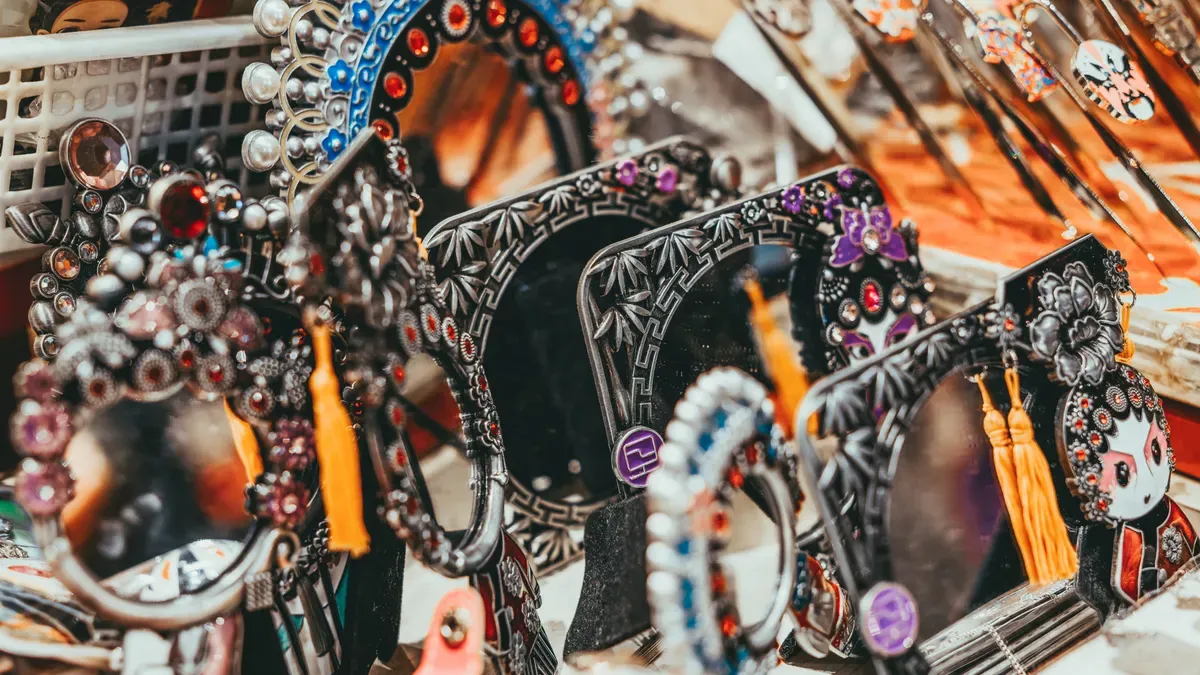
A shiny render by itself proves nothing. You need proof of finished pieces that can actually be made. Knowing about production stops costly mistakes later. Ask to see a portfolio of different jewelry pieces that really sold in stores.
A strong portfolio shows the whole design process. Look for early sketches, progress shots, and notes that break things down. These show how the team thinks and fixes problems. Check if they can handle many styles and rendering methods, like photoreal, ghosted, or exploded views. Teams that give credit to others and say exactly what they did show honesty. Passion projects often show more excitement and better quality. Jordan Donaldson's jewelry-rendering work is a good example. His realistic rendering, careful lighting, and clean page layout make his technical skill easy to see.
Read customer reviews with care. Look for patterns in feedback about deadlines, revisions, and final quality. A team that gets steady praise for custom jewelry designs likely handles complex orders well.
A freelance CAD designer on online marketplaces may not focus on jewelry. Many are general 3D modelers. They can build a shape that looks right. They cannot always make it work as a piece you can wear. Check for niche skills before you hire anyone. Ask specifically about jewelry design projects, not just general modeling work.
Request client references beyond the polished portfolio. A portfolio shows what the team wants you to see. References show how they act under real deadlines and pressure. Ask past clients about communication, how they handle revisions, and whether the final product matched the render.
A dedicated China CAD jewelry design and prototyping team should give references without hesitation. They should also show examples of custom jewellery designs that went from concept to production. If they cannot link their portfolio to real finished products, treat that as a warning sign. Start with a small paid test before you commit to a full order.
A single price can hide the true cost. A detailed quote keeps you safe from surprises. Time works the same way. Before you pick a China CAD jewelry design and prototyping team, ask for a full breakdown of both.
Ask for a quote that lists design, modeling, prototyping, and revision costs separately. Materials, machine time, finishing, and assembly labor set the prototype price. Extra revision rounds, express shipping, cleanup of design files, and test reports are often not included. Ask about every line item.
Compare quotes by what they cover, not just the big price at the top. A quote that includes two revisions can beat a lower price that charges for every change. A full-service manufacturer can cover design, molds, sourcing, production, packaging, logistics, and photography. That full-service model makes quoting simpler. Still, custom jewelry manufacturing needs clear line items.
Making samples usually takes 7–15 days after you confirm design, material, plating, and process. Simple designs and common materials finish sooner. Complex structures, special stones, multiple parts, custom molds, or repeated tests take longer. Ask how gemstone sourcing affects your timeline. Standard sizes and regular colors are easy to arrange. Unusual sizes, special colors, or custom stones take longer to purchase, have higher MOQs, and cost more.
Making jewelry in bulk takes 20–30 days. It can rise to 30–35 days during peak seasons. Some suppliers give a wide range, like 30–90 days. Ask what happens near day 75 and who controls the process. Trustworthy partners tie production time to a realistic date. They see 3D printing for jewelry as one step in a bigger workflow. 3D printing in jewelry manufacturing makes sampling faster. Casting, finishing, and stone setting still control final delivery. Good jewelry design and strong supplier skills, not just design complexity, decide if the quoted lead times hold. A solid design also cuts revision requests and keeps your project on schedule.
Don't jump into a full production run with a new china cad jewelry design and prototyping team right away. Begin with a small test project instead. This step lowers your risk and shows how the team really works. You learn their true speed, quality, and communication style before you spend real money.
A pilot order follows a clear timeline. Use this table to plan your test:
Development Stage | Scope / Deliverable | Usual Working Time | When the Clock Starts |
|---|---|---|---|
CAD development | Digital model from brief or existing file | 1–3 business days | After quotation approval and a complete brief |
Standard physical sample | Physical piece in agreed material and finish | 7–12 business days | After specifications and CAD are confirmed |
Complex physical sample | Sample with complex settings or multiple finishes | 10–15 business days | After specifications and CAD are confirmed |
Selected fast-track sample | Expedited sample for eligible projects | From 3 business days | After eligibility and material availability are confirmed |
The quotation should list CAD work, printing, metal sampling, stones, finishing, tooling where needed, revision rounds and delivery. Confirm which items are included and which need a separate quote. Changes to construction, materials or finish can require another development stage.
Judge success by results you can measure. Your pilot should go from CAD-file engineering review to delivery faster. A small 100-piece test batch should show a lower defect rate. The test order should also prove the product is good enough to move to market launch.
Protect your jewelry design before you share files. Sign a NNN agreement (non-disclosure, non-use, non-circumvention) before any disclosure. This contract covers CAD files, 3D models, drawings, and prototyping specs. A manufacturing agreement should confirm that you own the moulds, tooling, and CAD-derived improvements. Register your trademarks, patents, and copyrights with CNIPA, and record them with Chinese Customs. Chinese Customs enforcement shows why written protection matters.
Post-sale support deserves the same care. Ask for ISO9001 certification and a written defect rate cap. Confirm warranty terms and who pays for short shipments or faded products. Request the correct HS Code early and a Certificate of Origin without hesitation. A strong jewelry manufacturing facility provides all of this. Such a manufacturer shows what end-to-end reliability looks like: strict quality control, safe packaging, and reputable logistics partners. Its customer support covers the full manufacturing process, from design through delivery. That level of accountability separates reputable factories from risky jewelry suppliers. Treat your production partner choice as a long-term relationship, not a one-time purchase.
The manufacturing partner you pick shapes your product quality and brand reputation. Think of this choice as a business investment, not just a simple purchase.
Go through the five areas with care: CAD expertise, communication, portfolio, pricing, and reliability. Each one shows how a china team handles real production pressure.
A careful, step-by-step approach lowers your risk. Begin with a small test project. Check every claim before you commit to a full run.
These tips give you a clear path. You can now judge suppliers with confidence. Use this checklist to find the right factory and build a lasting partnership.
Ask about engineering details. A strong team explains how prongs hold stones and how metal thickness changes durability. Look at their hand-sketch-to-CAD process. Inspect finished pieces, not just renders. Ask which CAD software they use. Skilled teams also use 3D printing for jewelry during sampling.
A freelance CAD designer can make attractive models, but few know real production limits or finishing. A full-service factory combines CAD, molds, casting, and quality control. You protect your timeline by choosing the right factory when complex jewelry designs need many changes.
Request separate prices for design, modeling, prototyping, revisions, materials, and finishing. Compare what each quote covers, not total price. A quote with two revisions often beats a lower price that charges per change. This helps you judge international jewelry manufacturing costs more fairly.
Sign a NNN agreement before sharing your jewelry design files, CAD models, or drawings. Confirm in writing that you own all molds and tooling. Register patents and trademarks with CNIPA. This written protection matters because 3D printed jewelry files are easy to copy during production.
Start with a small paid test project. Choose a simple ring or pendant. Write down milestones, revision rounds, and file handoffs. Track response time and final quality. This pilot run also shows whether a China CAD jewelry design and prototyping team meets your standards before you invest in full production.


 EN
EN
 English
  Italian
  Spanish
  Ukrainian
  Japanese
  Norwegian
  Portuguese
  Korean
  Russian
  French
  Danish
  German
  Arabic
  Back to List