You can source custom fashion jewelry from china in seven clear steps. Follow this sequence to move from an idea to a delivered collection:
Define your product requirements.
Vet suppliers.
Build your RFQ.
Order samples.
Place the order.
Inspect and ship.
Build the relationship.
This guide walks you through each step with practical advice and technical detail. It follows the standard six-phase workflow: RFQ, Sample, Order, Production, QC, and Shipping. You will learn how to brief a China jewelry manufacturer for fashion collections, compare quotes fairly, and approve a sample with confidence. Each step builds on the one before it. Skip a step, and you risk costly rework later.
Make a clear list of what you need for your product before you contact suppliers.
Check your suppliers closely by looking at their certifications and how well they communicate.
Make a detailed RFQ so you can compare quotes fairly.
Approve a sample and lock in the specs before you start bulk production.
Plan your reorders and stay consistent to succeed over the long term.
Begin with a written product spec. List the base metal, the plating type and thickness, the stone or enamel details, and the clasp style. A china jewelry manufacturer for fashion collections can't give an accurate quote without these details. Unclear briefs lead to unclear prices.
Set your target price before you contact suppliers. Start from your retail price and your margin, then work backward. State the target clearly in your brief. This shows each factory where to cut cost, either through lighter construction or simpler findings. Write the spec once, then reuse it for every quote request.
Your order quantity sets the minimum order quantity, or MOQ. MOQ varies a lot for custom fashion jewelry. The table below shows typical ranges.
Metric | MOQ Value |
|---|---|
Average MOQ range per design | 20–200 pieces |
Low MOQ range for small businesses | 10–50 pieces |
Overall MOQ span (design/material dependent) | 10 to 1,000+ pieces |
Example manufacturer A | 30 pieces per item |
Example manufacturer B | 20 pieces per design |
Example manufacturer C | 50 pieces per design (negotiable for first-time buyers) |
There is no universal MOQ. The number depends on the product and the supplier's process. A very low MOQ may mean the factory uses an existing mold or standard parts. Ask about this in the quotation.
Timelines vary too. One manufacturer quotes 30 to 90 days for standard production, depending on complexity and volume. Another lists 1–4 weeks for samples and 6–12 weeks for production. A third reports about 2–6 weeks, with stainless steel and silver moving faster than custom gold pieces. Share your launch date in the spec. Then ask each supplier to confirm a delivery window against it.
Start with the paperwork. Ask each candidate for its certificates and check them against the work you need. A china jewelry manufacturer for fashion collections should show testing that matches your destination market. The table below shows what real factories display.
Manufacturer | Location | Certifications / Compliance |
|---|---|---|
Uvaraj (Dongguan factory) | Dongguan, Guangdong | ROHS and REACH compliant; nickel-controlled and hypoallergenic |
Heng Dian Trade | Guangzhou | SGS and Intertek testing for lead and nickel-free requirements |
Romanfeel | Guangzhou | SGS and Intertek standards; lead-free and nickel-free manufacturing |
Lurree | Guangzhou | RJC and BSCI certified; global environmental and labor safety standards |
Check ISO 9001 through the SQC Certification online portal using the certificate number. Ask for SGS reports to check safety and quality benchmarks. Then look at the factory floor. Advanced equipment such as vacuum casting machines signals precision on intricate designs. An in-house quality lab with XRF analyzers lets the factory test metal purity on site. Ask whether the factory handles CAD design through polishing in one building. Integrated services reduce handoffs and delays.
Capacity claims need a reality check. Treat stated output and lead times as stated capacity, not capacity reserved for your order. Ask how much open capacity exists at your required quality level. Compare total production value, not just unit price. Sampling cost, MOQ, lead time, defect rate, and packaging all affect the real cost.
Communication tells you a lot. Track response times during supplier selection. A reply within 24 hours generally points to stronger customer service. Clear answers on pricing, timelines, and shipping methods matter more than fast replies alone. A fashion jewelry manufacturer that dodges basic questions about plating type or thickness is a warning sign. Ask about plating thickness, stone grade, and ring size tolerances. Vague answers here predict vague results later.
Watch for red flags in samples and documents. Missing or blurred hallmarks, uneven plating, and loose settings all signal trouble. Conflicting exporter names or quantities on paperwork fail cross-checks. Compare the seller's declarations with your destination-country regulations. Keep photographs, test results, and written communications for your audit trail.
A careful screen saves money. Check certifications, visit or audit the facility, and test communication before you send an rfq. This step separates reliable chinese suppliers from risky ones. A strong fashion jewelry supplier earns trust through documents and answers, not promises.
A custom fashion jewelry RFQ turns your brief into a document every factory can answer the same way. Start with the product specification: jewelry type, weight, dimensions, finishing, and stone-setting style. Add design references such as CAD files, 3D models, or sketches. Suppliers quote more accurately when they see the geometry, not just a description.
Your custom fashion jewelry rfq include these fields so each supplier prices the same scope:
Specification Category | What to Include in the RFQ |
|---|---|
Materials | Preferred metals and plating (14K/18K gold, sterling silver, enamel) and stone grades |
Changes to dimensions, stone settings, plating colors, or chain styles | |
Branding | Engraved logos, custom hang tags, branded packaging |
Compliance | REACH, RoHS, and SGS-certified lead/nickel safety for your target market |
Quantity | Units per style and MOQ |
Timeline | Delivery deadlines and lead-time expectations |
Commercial terms | Payment terms, quality guarantees, after-sales service, quote validity |
State your tolerances too, such as plating thickness and weight allowances. A clear specification removes guesswork. Send the same sheet to every china jewelry manufacturer for fashion collections on your shortlist.
Line up every supplier quote against your single spec sheet. This keeps the supplier comparison fair. A quote that omits plating thickness or packaging is incomplete, not cheaper. Score each reply on price, MOQ, lead time, and compliance evidence.
Know who you are comparing. A direct factory usually offers a lower per-unit cost with no intermediary margin. A trading company adds a markup and can quote lower volumes by pooling orders. Factories often set MOQs at 500–1,000+ units, while traders can reach 50–100 units.
Understand which type of supplier you are working with. The right choice depends on your sourcing strategy, not a blanket preference.
Weigh the trade-offs honestly. Factories give direct access to the production floor, yet communication can be harder. Traders speak stronger English and handle international buyers well, yet the factory behind your order may stay hidden. When you compare chinese suppliers, check that each rfq for chinese suppliers returns a written specification with acceptance criteria. Ask for a pre-balance inspection clause. Verify the supplier rather than assume. A disciplined supplier quote review now prevents disputes during production.
How long it takes depends on your design. Simple designs that use moulds the factory already has can ship in 15–20 days. Fully custom designs that need new tooling usually take 30–45 days, and that includes making the sample. Plan your launch around these time windows.
Custom casting is the most common way to manufacture. It gives you full control over shape and detail. Outsourcing works better for simpler pieces or tight deadlines, when a partner's existing capacity fits best. Neither path is better by itself. Match the method to how complex your design is and how much you need.
When you source custom fashion jewelry from china, check the sample against your brief, not against a pretty photo. Look at these common problem areas:
Quality problem | Where it starts | Factory check |
|---|---|---|
Loose stones | Stone seat, prong height, setting pressure, or polishing loss | Close-up stone setting photos and movement checks |
Plating wear or color drift | Base metal, surface prep, plating route, batch control, packing contact | Finish sample, color comparison, and packing separation |
CAD-to-sample mismatch | Unclear dimensions, stone specs, comfort, logo position, or wall thickness | CAD notes, sample measurement, and change approval |
Broken chain or clasp | Weak jump rings, thin posts, wrong clasp, heavy pendant, or poor soldering | Pull checks, connection photos, and product-specific findings review |
Check each category by product type. For rings, look at wall thickness, inner comfort, prong height, and ring size. For earrings, look at post thickness, pair matching, solder joints, and drop balance. For bracelets, test how the clasp works, how the links move, and how it feels on the skin.
Sample approval is a decision, not just a step to get through. Confirm the product shape, size, and construction. Review the finish and the parts you can see. Check where the logo sits and how the packaging looks. Write down every change before you lock the reference for bulk production.
Write the specification into one SKU file for each design. Record the current version, dimensions, components, finish, and the sample approval decision. Note whether the quoted unit is pieces, earring pairs, or complete sets. Confirm whether color or packaging variations have their own minimums. This file becomes your approved sample record for every reorder.
A locked specification protects your custom fashion jewelry manufacturing run. Your factory builds against the approved sample, and your QC team checks against the same reference. Batch drift starts when approved sample records go missing. Keep the file, and keep the sample itself.
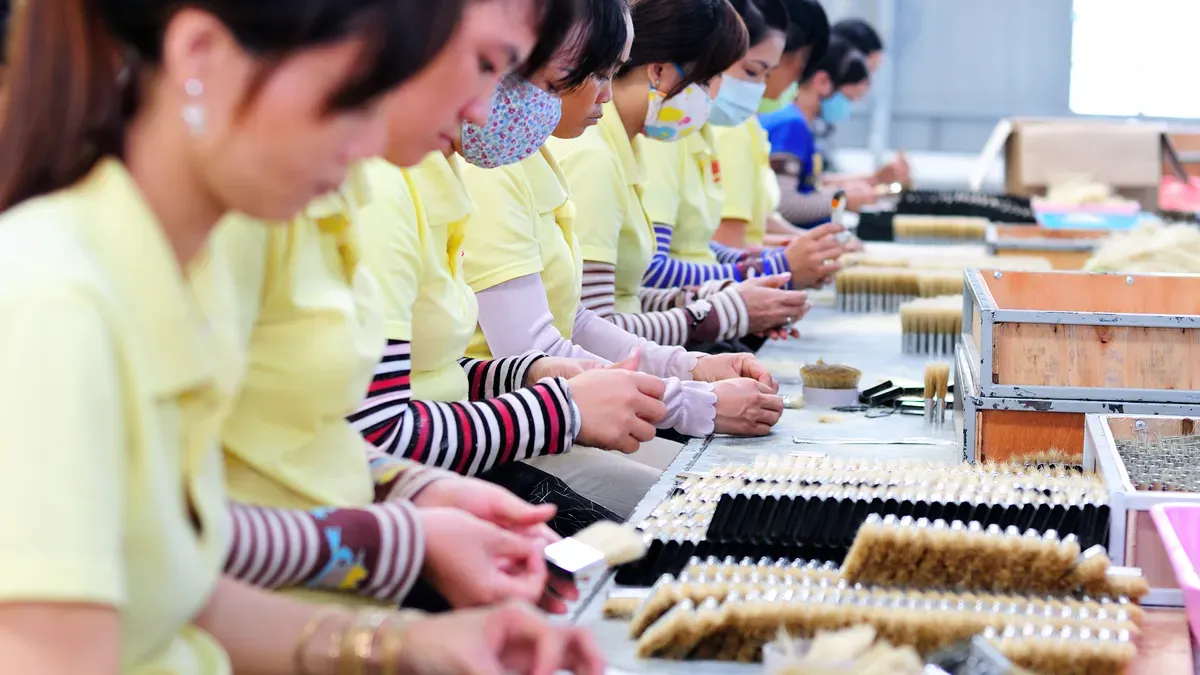
The usual MOQ for silver jewelry from China is about 50 units. Factories list MOQs in tiers, and each tier shows a different factory cost. Ask the factory which cost sets the number, then use the matching lever.
Why the MOQ Exists | The Lever That Moves It |
|---|---|
Setup cost | Cover the setup fee |
Material minimum | Commit to future volume |
Line scheduling | Order in the slow season |
Customization | Simplify the trial run |
Only one of these costs money. The other three cost patience, a promise, or a simpler spec. Paying more upfront, even 100% for a small order, often moves the number more than pressure does. Share your sales plan and real market tests to show long-term potential. Get the unit price for your quantity in writing, and treat MOQ as a trade, not a fixed rule.
Payment follows a standard structure: a 30% deposit starts production, and a 70% balance comes after QC approval, before dispatch. Check the supplier's business license through official Chinese government channels before you pay. Use safe methods like T/T for larger orders or platform escrow, and avoid risky options like Western Union. Agree on Incoterms in the quotation so freight responsibility is clear.
Lock the schedule to your rfq timeline. Ask the manufacturer to break down time for design review, tooling, first sample, revision, and final approval. Confirm that the approved sample uses production materials and stays with the factory as the reference standard. Request a production video or photos at each stage, and track progress through the usual steps: casting, stone setting, polishing, QC, and packing.
Set inspection checkpoints before bulk runs. Require at least three sample sets: one kept by the factory, one shipped to you, and one sent to an independent QC. Ask about the defect rate and request a written cap in the agreement. Compare finished pieces against master color swatches under standard light, and test clasps and posts by hand. Choose suppliers who share certificates for gold purity and stone authenticity. A transparent factory welcomes these checks.
Book your pre-shipment inspection when goods are 80–100% complete and ready for shipping. An inspector visits the factory and follows a set sequence:
Count total cartons and confirm quantities per destination.
Pull a random sample from the batch.
Judge the defect rate against AQL standards such as ANSI/ASQC Z1.4 or ISO 2859-1.
Review appearance and workmanship, classifying defects as minor, major, or critical.
Confirm dimensions, materials, weight, color, markings, and packaging against the order.
Test clasps, chains, and settings for function.
Check certification labels required for your market.
Compile a report of findings and conclusions.
During the visual check, focus on plating tone, scratches, dark spots, stone placement, loose glue marks, chain connections, logo clarity, and card and pouch accuracy. If you have doubts about chemicals, send them to an independent lab.
Compliance testing depends on your destination market, not the factory's usual practice. The EU sets REACH limits on nickel release, lead, cadmium, and phthalates. The US regulates children's jewelry under CPSIA, with lead limits, required third-party testing, and a Children's Product Certificate. ASTM F2923 covers children's jewelry and ASTM F2999 covers adult pieces. Test lead and cadmium by naming each material: base metal, solder, plating, stones, and separable parts. Test nickel release on finished, plated pieces. In the US, children's jewelry means items meant mainly for ages 12 and under.
Get your documents ready before the goods leave the factory. You need a commercial invoice, a packing list, a bill of lading or airway bill, a certificate of origin if applicable, and a material declaration. The commercial invoice must list each piece with a specific description, quantity, weight, and total value. Describe items precisely, such as "brass necklace with glass beads," rather than "fashion jewelry." Generic descriptions invite customs holds. Undervaluing the shipment triggers scrutiny, so keep an appraisal or receipt ready as proof of value.
Match every document to your locked specification and your rfq terms. Accurate labeling of metal composition, gemstone authenticity, and country of origin keeps clearance smooth. Discrepancies in declared value or metal content may trigger inspection. Work with suppliers who provide complete paperwork without prompting.
Sourcing fashion jewelry for long-term distribution pays off when you plan ahead. Make a reorder calendar that tracks each SKU, current inventory, monthly sales, reorder point, order quantity, production status, and expected shipping date. This keeps inventory planning predictable and helps your china jewelry manufacturer for fashion collections get ready for repeat production.
Look at sales data before you reorder. Check units sold, sales speed, current inventory, return rate, customer feedback, and profit margin. Give bigger quantities to steady strong sellers and smaller reorders to slow movers. Figure out reorder timing by multiplying average sales rate by production and shipping time, then add safety stock. Place the next order before stock drops below expected sales during refill.
Keep the original SKU on every reorder. A steady code like TL-R102-S925-WG-US7 names the design, material, color, size, and variant, which cuts down on mistakes. Confirm the latest specification and keep the approved sample as a physical reference. Match plating color, material, finish, and thickness across batches so pieces bought months apart still match. Recheck gold and silver prices before you confirm, since old quotes may no longer reflect current costs. Don't assume a bigger order keeps the same lead time.
A long-term fashion jewelry supply partnership grows from small starts. Many strong relationships begin with a few SKUs and expand as the brand gains traction. Treat each order as a step in that arc.
Share your product mix, seasonal peaks, and custom requirements with your fashion jewelry manufacturer. Ask for pre-shipment testing on every run, and review compliance reports as your markets change. A reliable fashion jewelry supplier will welcome these checks. Move toward final supplier approval only after several clean batches. Good suppliers earn trust through consistency, and that trust lowers your risk with each season.
"There's no client that's too small... Some of the best long-term partnerships start small, with a handful of SKUs, and grow over time as the brand gains traction."
You now have the full path from idea to delivered collection. Use this checklist as your quick reference:
Define product requirements.
Vet suppliers.
Build your RFQ.
Order samples.
Place the order.
Inspect and ship.
Build the relationship.
Move through these steps one at a time. Rushing to a bulk order skips the checks that protect your money and your launch date. Each step gives you information the next one needs.
A disciplined sourcing process pays you back. You get fewer surprises, cleaner paperwork, and a supplier who knows your standards. Start with step one today, and let each stage earn your confidence before you commit.
The usual MOQ for silver jewelry from China is about 50 units. Factories set MOQs in tiers, and each tier has a different cost. You can often lower the number by paying the setup fee, promising future volume, ordering in the slow season, or making the trial run simpler.
Simple designs that use moulds the factory already has can ship in 15–20 days. Fully custom designs that need new tooling usually take 30–45 days, and that window includes making the sample. Share your launch date in the RFQ so each supplier can confirm a delivery window against it.
A standard structure applies: a 30% deposit starts production, and a 70% balance comes after QC approval, before dispatch. Confirm Incoterms in the quotation so freight responsibility stays clear. Check the supplier's business license through official Chinese government channels before you pay.
Book the inspection when goods are 80–100% complete and ready for shipping. The inspector pulls a random sample and judges the defect rate against AQL standards such as ANSI/ASQC Z1.4 or ISO 2859-1. Review the report before you release the balance payment.
Testing depends on your destination market. The EU sets REACH limits on nickel release, lead, cadmium, and phthalates. The US regulates children's jewelry under CPSIA, with ASTM F2923 covering children's pieces and ASTM F2999 covering adult jewelry. Name each material when you ask for lab tests.

 EN
 English
 Italian
 Spanish
 Ukrainian
 Japanese
 Norwegian
 Portuguese
 Korean
 Russian
 French
 Danish
 German
 Arabic
 Back to List